Guest article: Text and technical article by Ingo Schwabbaur, HolisticaFit & Consulting
It's often assumed that protein intake is only relevant for competitive or strength athletes. This misconception persists and leads many people to underestimate the benefits of protein for general health. However, the idea that protein is only important in the context of sports is too simplistic. In fact, protein is essential for everyone, regardless of activity level.
This topic is particularly important to Ingo Schwabbaur. With a short series of posts on our blog, he aims to offer a fresh perspective. Proteins are the building blocks for cells and tissues, for muscle repair, and for the formation of enzymes and hormones, which is why they can be described as essential building blocks for the body. An adequate supply of protein is therefore crucial for health, not just for athletes, but for everyone.
Amino acids fulfill important functions in the body. The body only utilizes 20–30% of the ingested proteins, which underscores the importance of protein supplements.
Overview of the individual amino acids
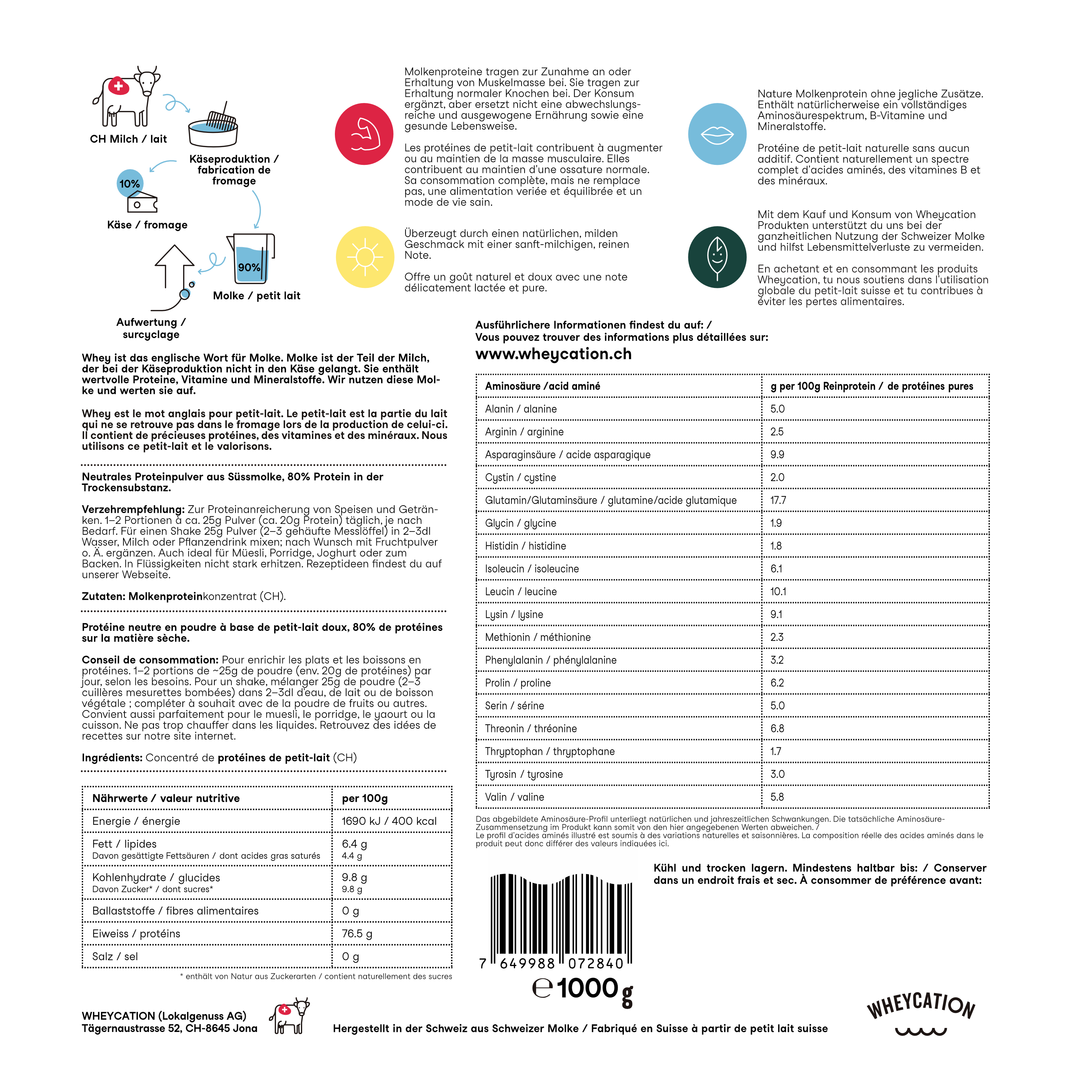
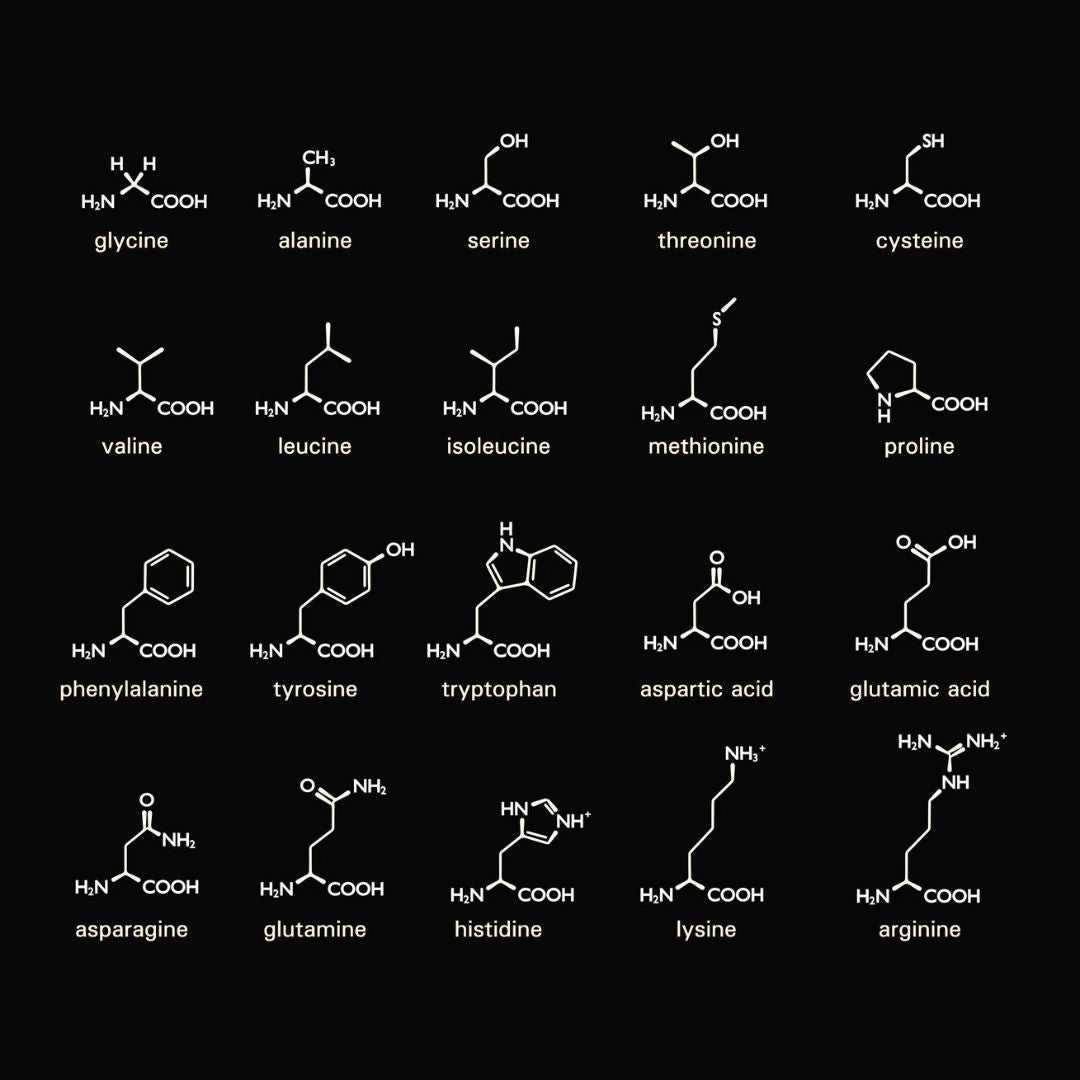
Below is an overview of the 20 proteinogenic amino acids. These are the building blocks from which the body's own proteins can be produced, i.e., for muscles, immune cells, and so on.

Amino acids are classified into essential, non-essential, and semi-essential groups. Essential amino acids, such as lysine, must be obtained through food, as the body cannot produce them itself. The body can synthesize non-essential amino acids, and semi-essential amino acids only under certain conditions.
For example, if there is too little lysine, arginine also becomes essential because the body cannot produce it itself.
The following image roughly illustrates what the individual amino acids are needed for.

Amino acids in practical use
L- and D-amino acids differ in the orientation of the amino group at the central carbon atom, as can be seen in the structural formula, but this is not important for our purposes. The correct notation would be, for example , L-arginine, which we will disregard for the sake of simplicity.
An overview of the indications for each amino acid.

Effect of amino acids on the immune system
- Structure and nutrition of immune cells
- The intestinal immune system is strengthened.
- Tight junctions ( connecting pieces between intestinal epithelial cells ) are strengthened – improving the intestinal barrier.
- Anti-inflammatory effect
- Strengthening detoxification
When we look at the immune system, we find that amino acids are involved everywhere, strengthening these physical barriers through which pathogens can penetrate, along with other important micronutrients. Amino acids are also found throughout the body when the immune system is activated.

What happens during an infection?
During infections , protein requirements increase by 30–40% because the immune system rapidly produces many immune cells and immune factors. Glutamine consumption increases five to tenfold . The body uses amino acids from the blood and especially muscles to meet this demand, resulting in muscle breakdown . It is recommended to specifically increase protein intake by about 30% during infections or after surgery.
Glutamine is not an essential amino acid; it can be synthesized from other amino acids, although this process is not straightforward. The body initially utilizes glutamic acid from its free amino acid pool and stores glutamine primarily in the muscles. During infections, glutamine consumption increases, while appetite often decreases. This depletes muscle glutamine stores, which can lead to short-term muscle breakdown.
Those who become ill during a diet also risk a yo-yo effect : The loss of muscle mass reduces the basal metabolic rate, because one kilogram of muscle consumes about 10-15 kcal per day, and significantly more during activity.
Amino acids & immune system
Key functions and features:
 Summary
A balanced amino acid profile is crucial for maintaining stable immune function. Glutamine, arginine, and cysteine, in particular, are considered key factors for energy supply, antioxidant capacity, and cell regeneration. Glutamine serves as an important energy source for immune cells by being directly incorporated into cellular metabolism. For example, the need for glutamine increases during intensive training, which is why athletes should pay particular attention to ensuring an adequate supply. Arginine promotes cell regeneration by stimulating the production of nitric oxide, which improves blood flow and thus supports cell nourishment. Cysteine, as a precursor to glutathione, is crucial for antioxidant defense, as glutathione acts as one of the body's most important endogenous antioxidants and protects cells from oxidative stress.
Taurine and glycine have a regulatory effect on inflammatory processes. Glycine protects immune cells from oxidative stress and promotes the production of immunoglobulins; it is also used therapeutically in liver diseases. Taurine contributes to the stabilization of cell membranes and can inhibit inflammation, which is important, for example, in chronic inflammatory diseases.
Lysine and methionine exhibit antiviral and detoxifying effects, respectively. Lysine inhibits the replication of certain viruses, such as herpesviruses, and is therefore used to support treatment of such infections. Methionine supports detoxification in the liver by providing methyl groups, thus helping to eliminate harmful metabolic products from the body – an adequate methionine intake is particularly important during detoxification or liver therapies.
Bibliography
Roth, E. (2008). Nitrogen metabolism and nutritional requirements in critically ill patients. Minerva Anesthesiologica, 74(3), 123–133
Calder, P.C. (2006). Glutamine and the immune system. Clinical Nutrition, 25(2), 195–204.
Wu, G., & Morris, S.M. (1998). Arginine metabolism: nitric oxide and beyond. Biochemical Journal, 336(1), 1–17.
Griffith, O.W. (1999). Biological and pharmacologic regulation of mammalian glutathione synthesis. Free Radical Biology and Medicine, 27(9–10), 922–935.
Schaffer, SW, Jong, CJ, Ramila, KC, & Azuma, J. (2010). Physiological roles of taurine in heart and muscle. Journal of Biomedical Science, 17(Suppl 1), S2.
Smriga, M., & Torii, K. (2003). Lysine acts as a partial serotonin receptor 4 antagonist and inhibits serotonin-induced intestinal pathologies in rats. PNAS, 100(26), 15370–15375.
Kim, CH, et al. (2007). Glycine regulates inflammatory cell activation via glycine-gated chloride channels. Shock, 27(6), 577-583.
Lu, S.C. (2009). Regulation of glutathione synthesis. Molecular Aspects of Medicine, 30(1–2), 42–59.
All images used are from the lecture "Amino Acids – Their Use in Different Diseases" - Dr. med. Mantwill - Dr. Spichalsky Academy; 2024