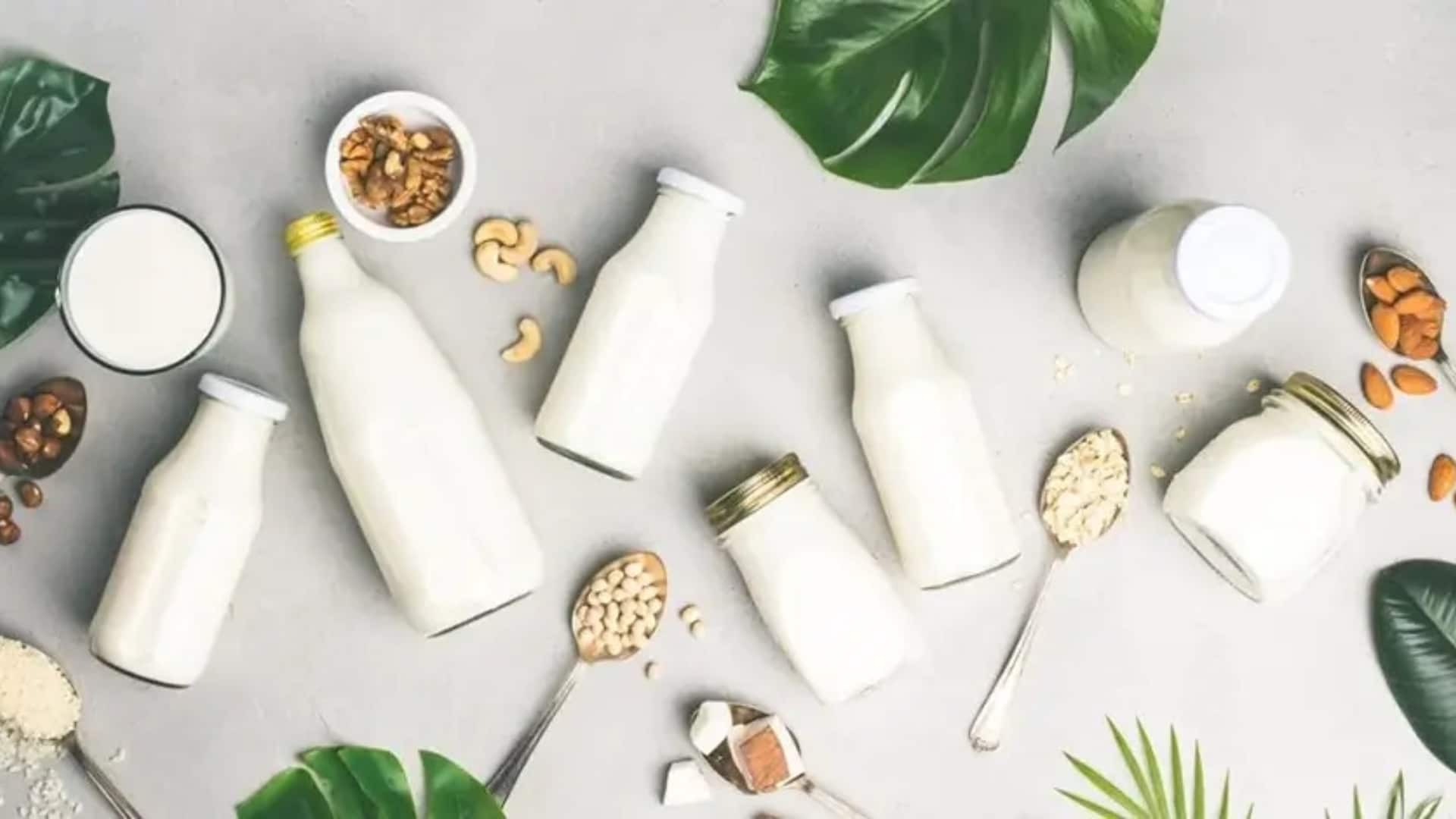
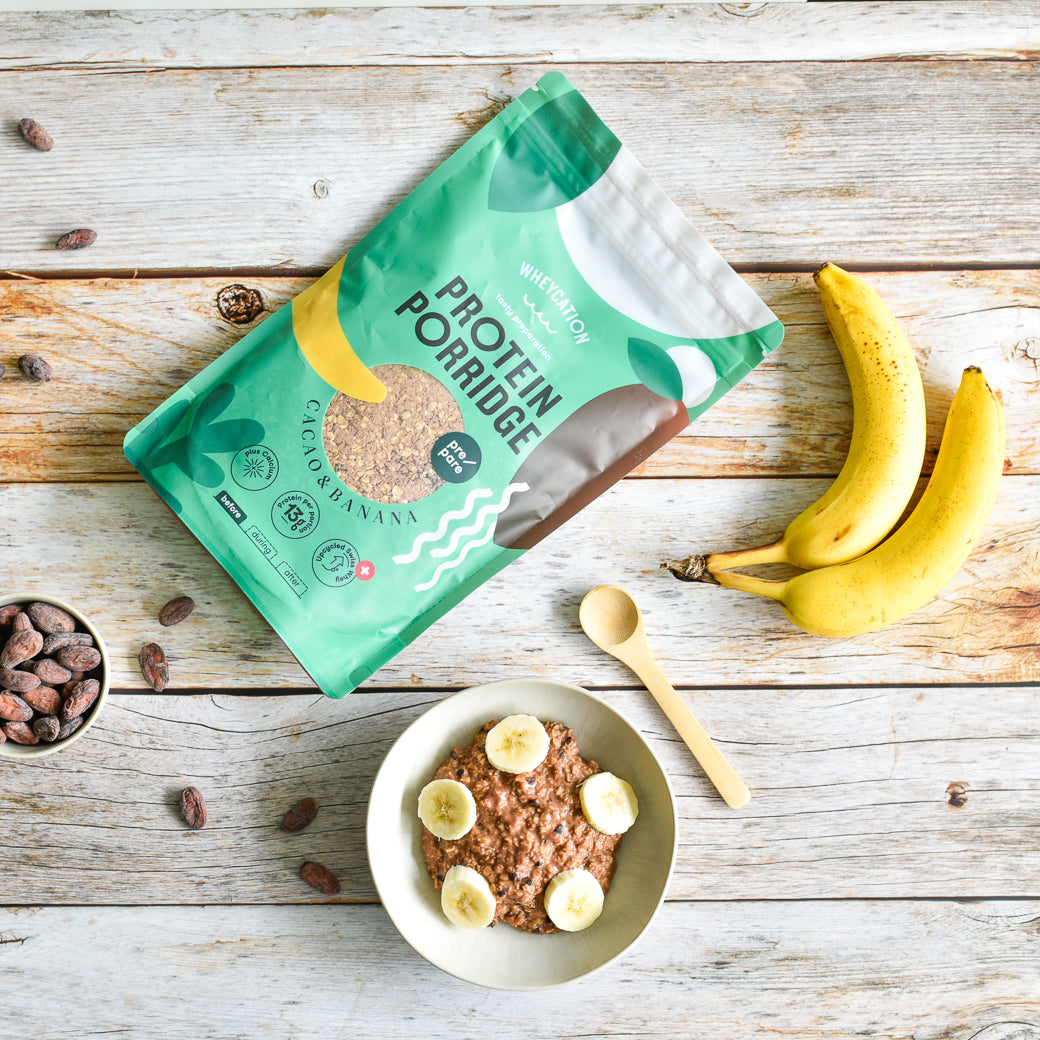
Our Protein Porridge brings together Swiss oats, Suisse Garantie certified whey protein and real fruit into a breakfast that keeps you full for hours and tastes naturally sweet. No added sugar, no artificial additives — just good.

Quality from Switzerland

No compromise on taste

Naturally sustainable

New
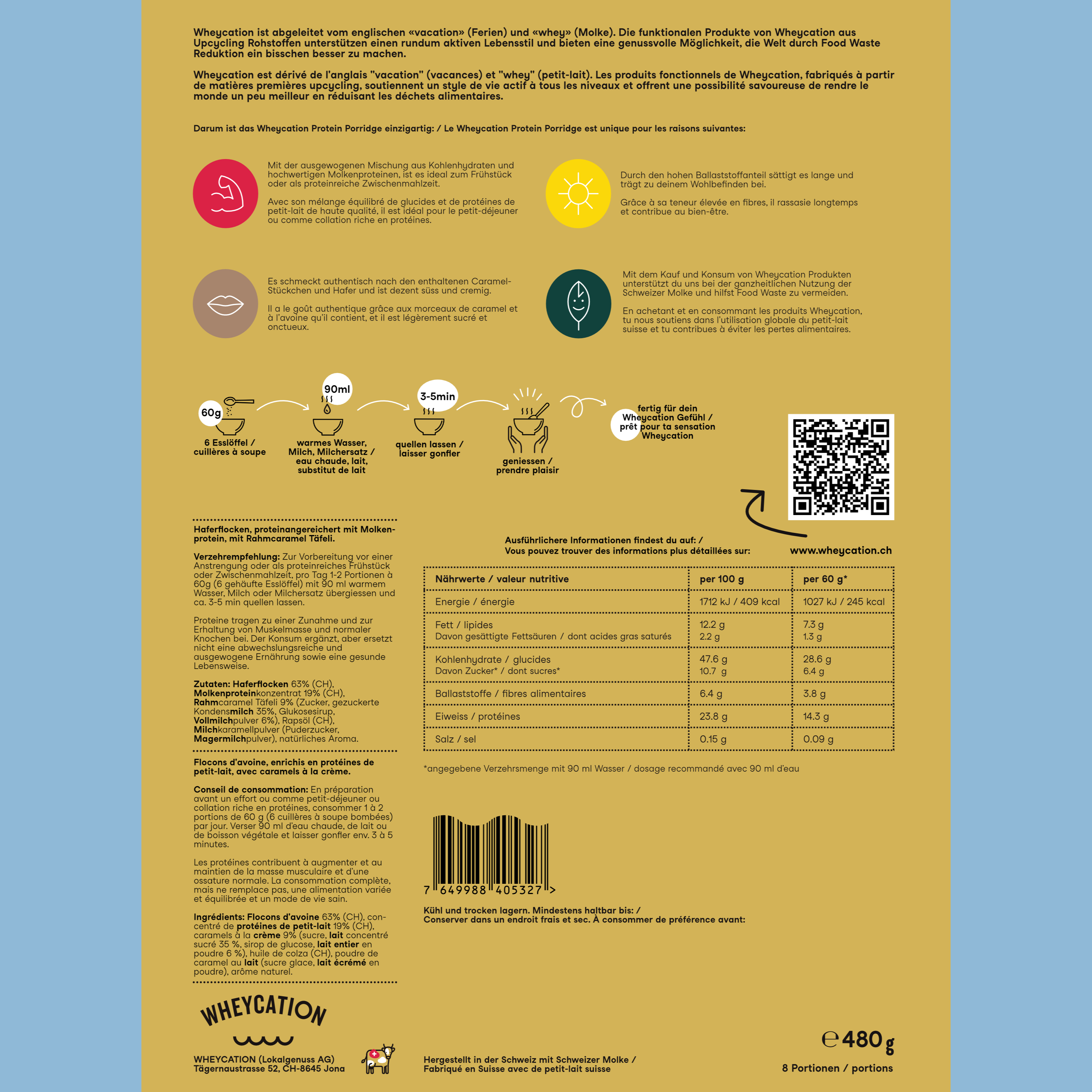
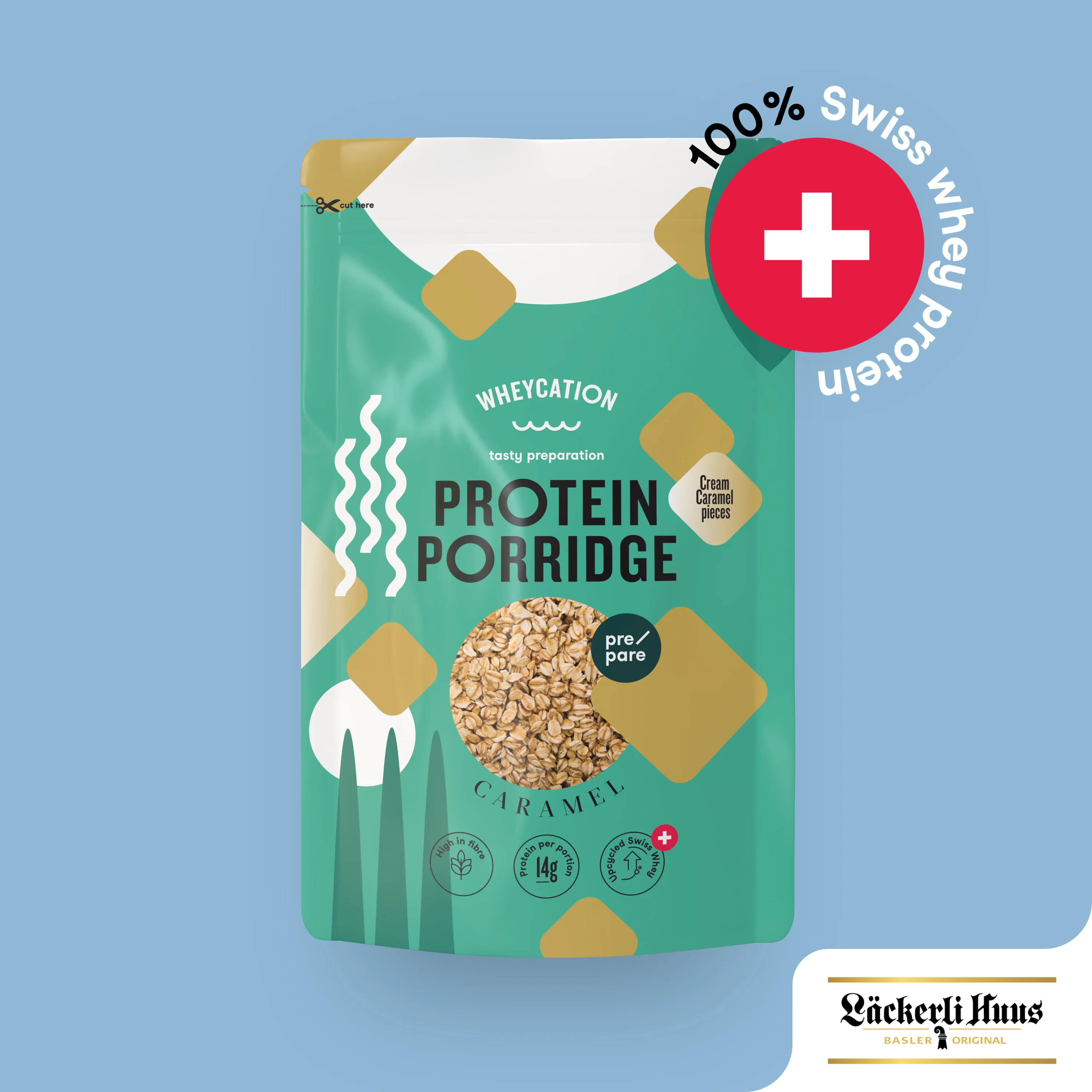
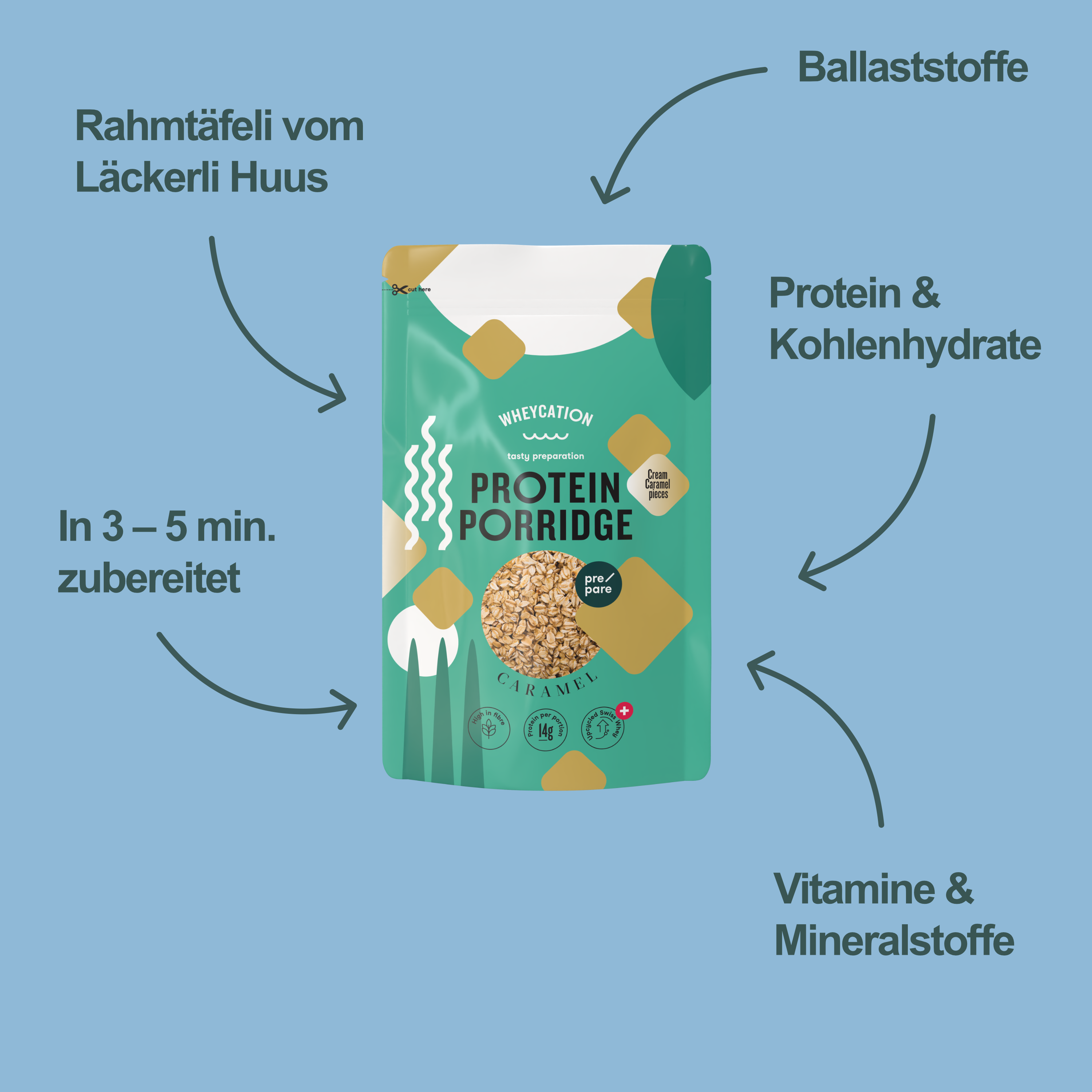
Whey Protein Porridge Caramel 480g
Whey Protein Porridge Caramel 480g

CHF 19.90Unit price (CHF 41.46  per  kg)

More about Swiss whey

Find out what makes our products so special.

Read more
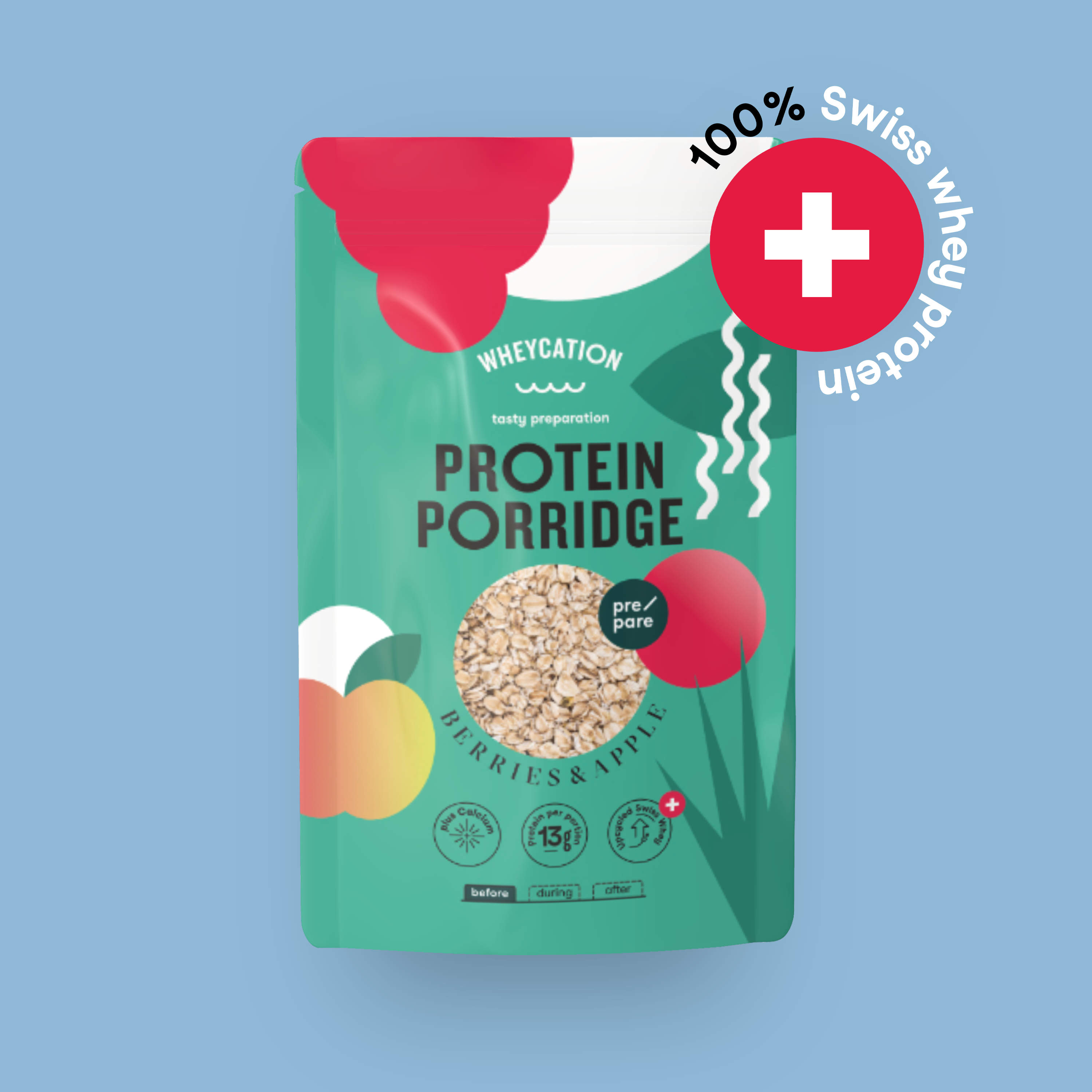
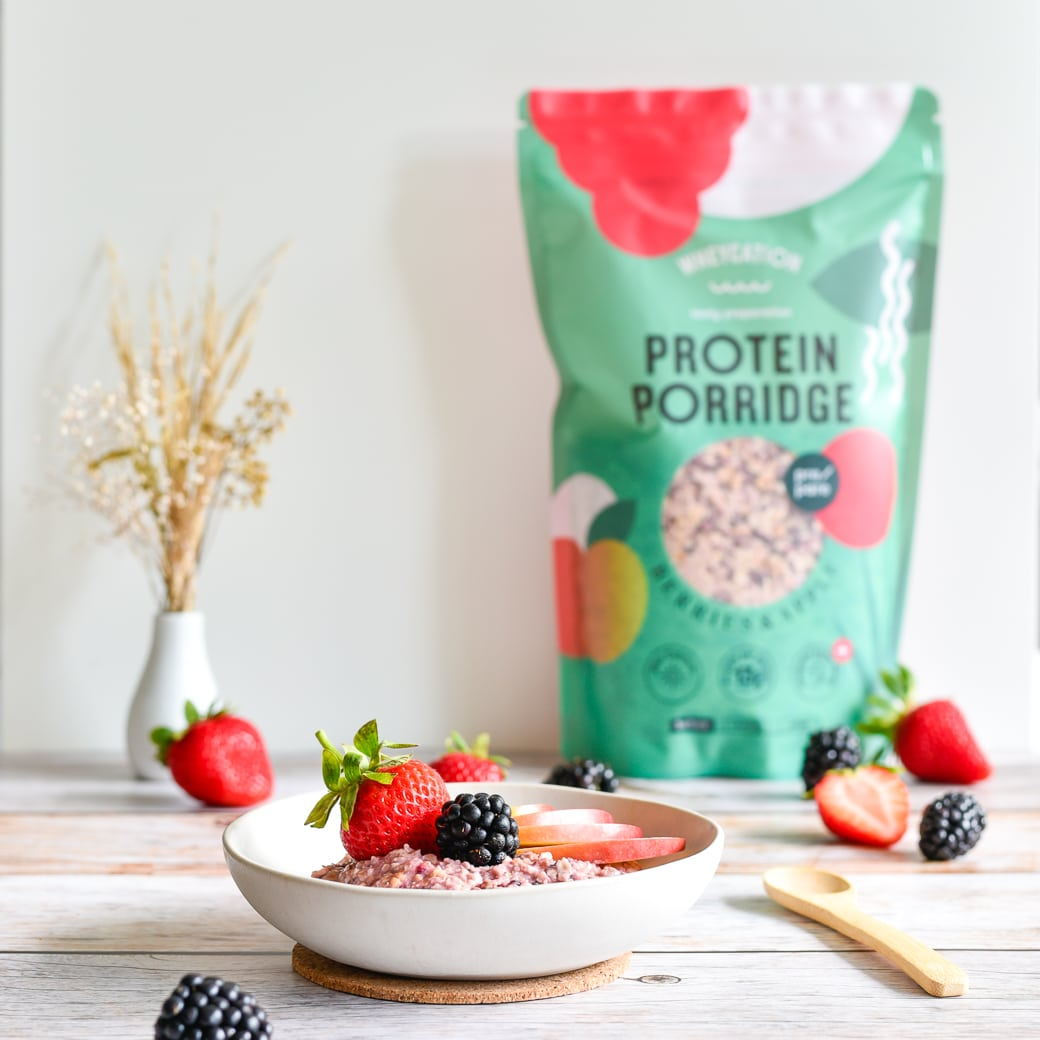
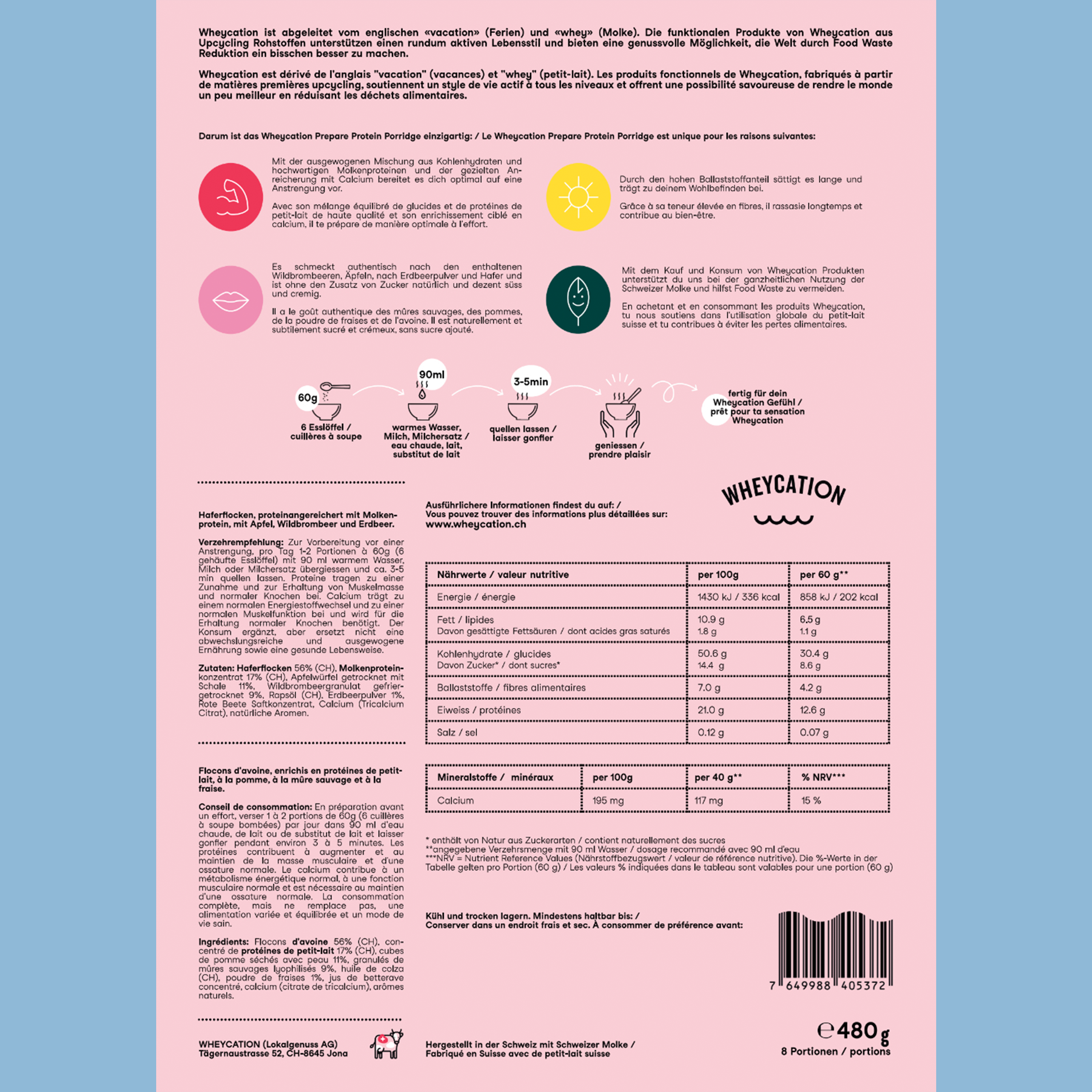
Whey Protein Porridge Berries & Apple 480g
Whey Protein Porridge Berries & Apple 480g
CHF 19.90Unit price (CHF 41.46  per  kg)
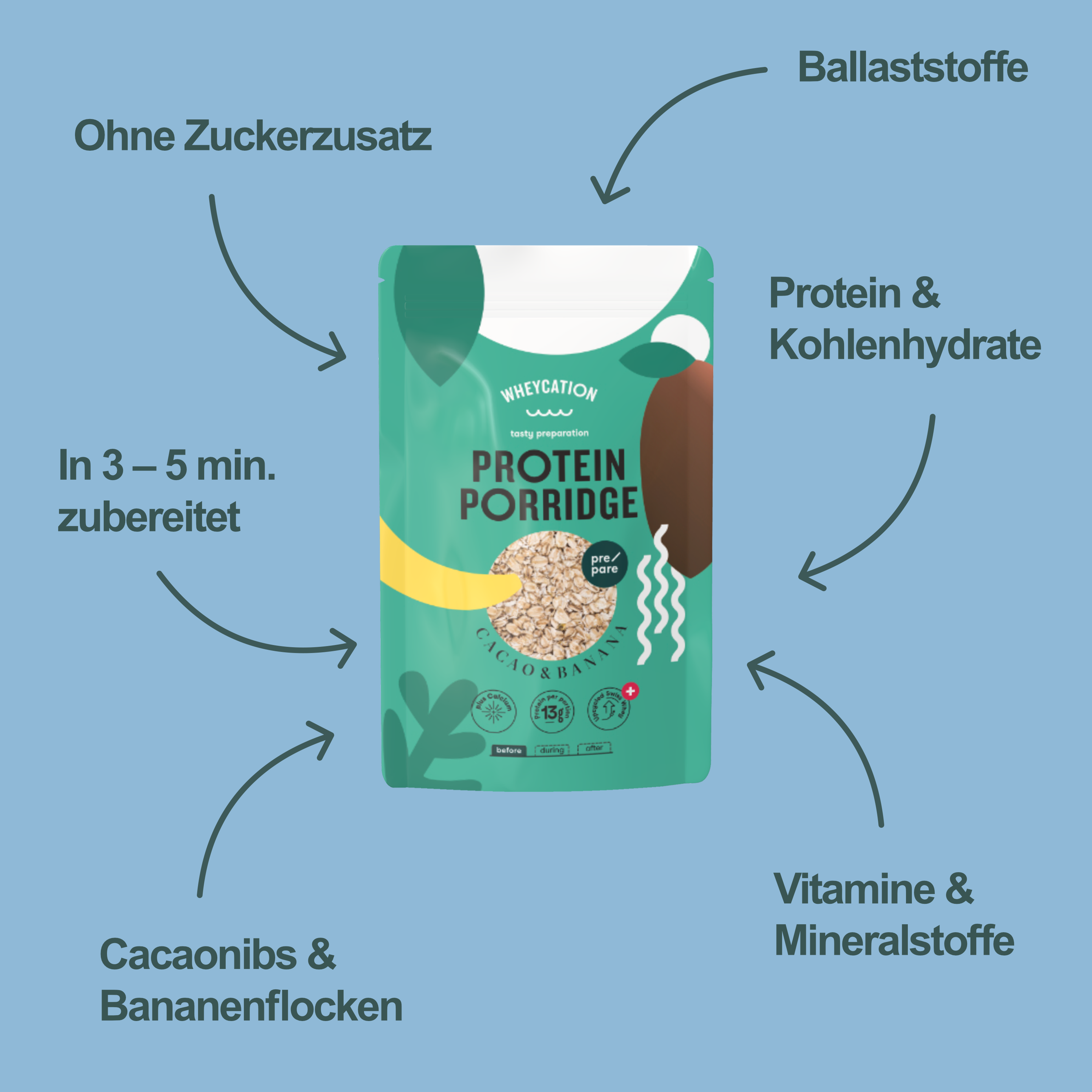
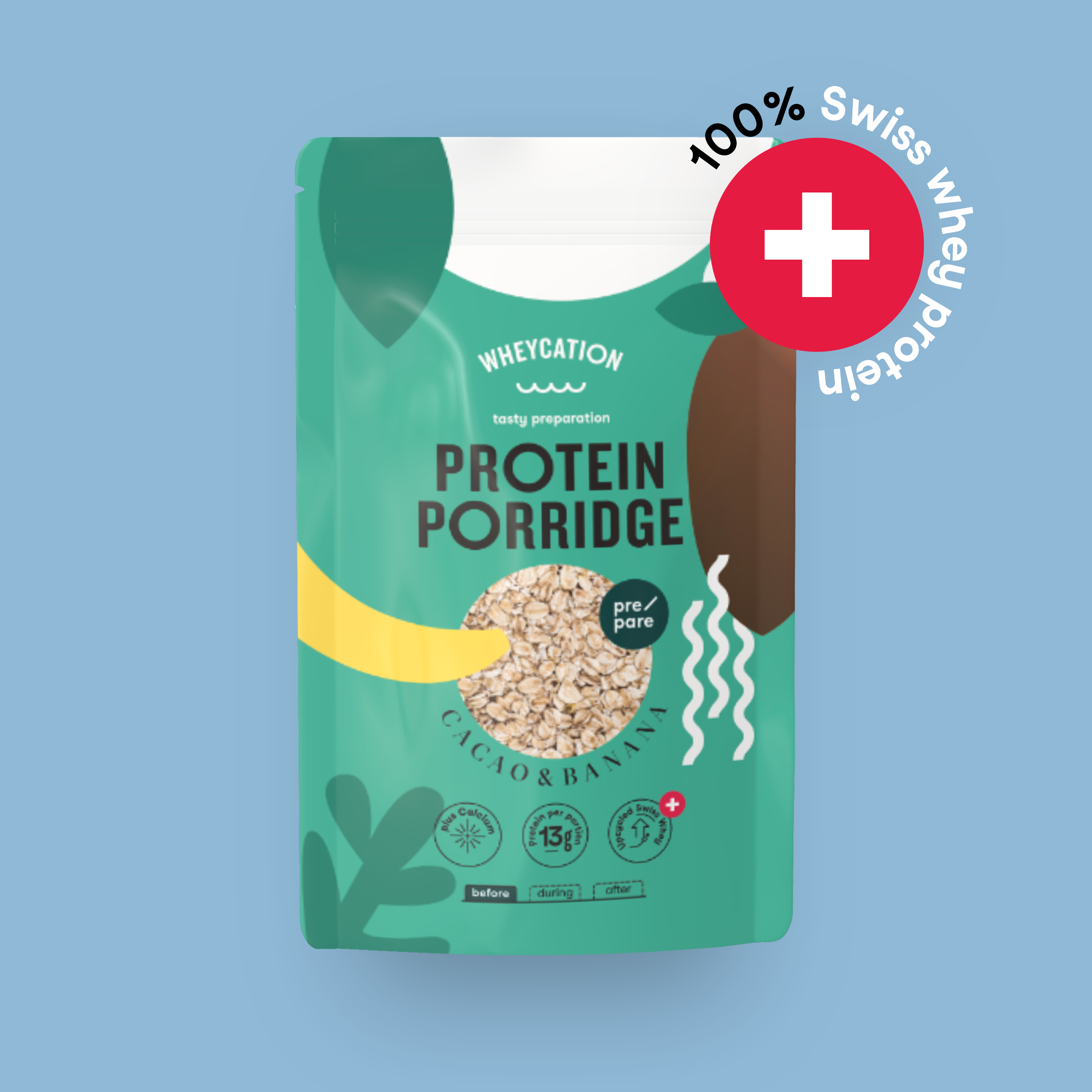
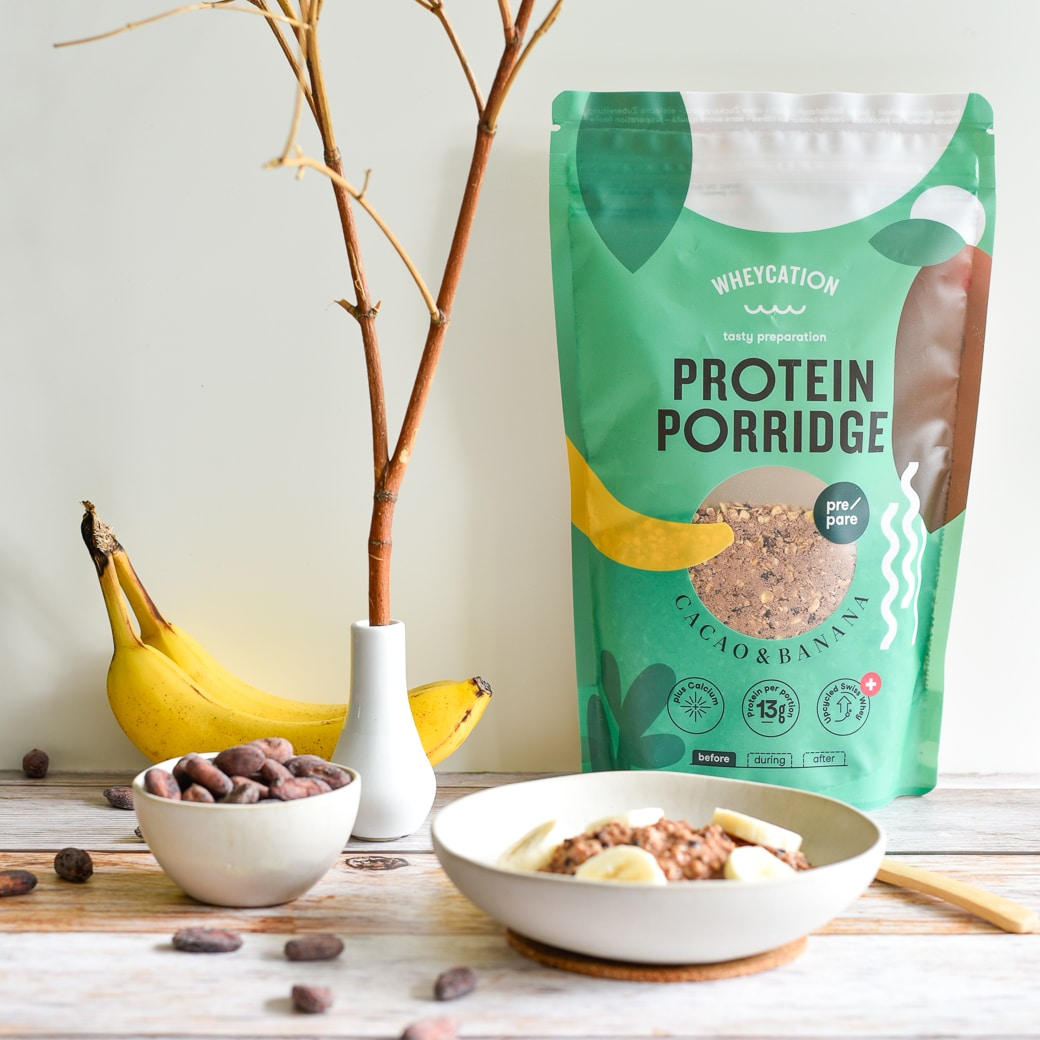
Whey Protein Porridge Cacao & Banana 480g

Whey Protein Porridge Cacao & Banana 480g

CHF 19.90Unit price (CHF 41.46  per  kg)

Ready in 3 to 5 minutes

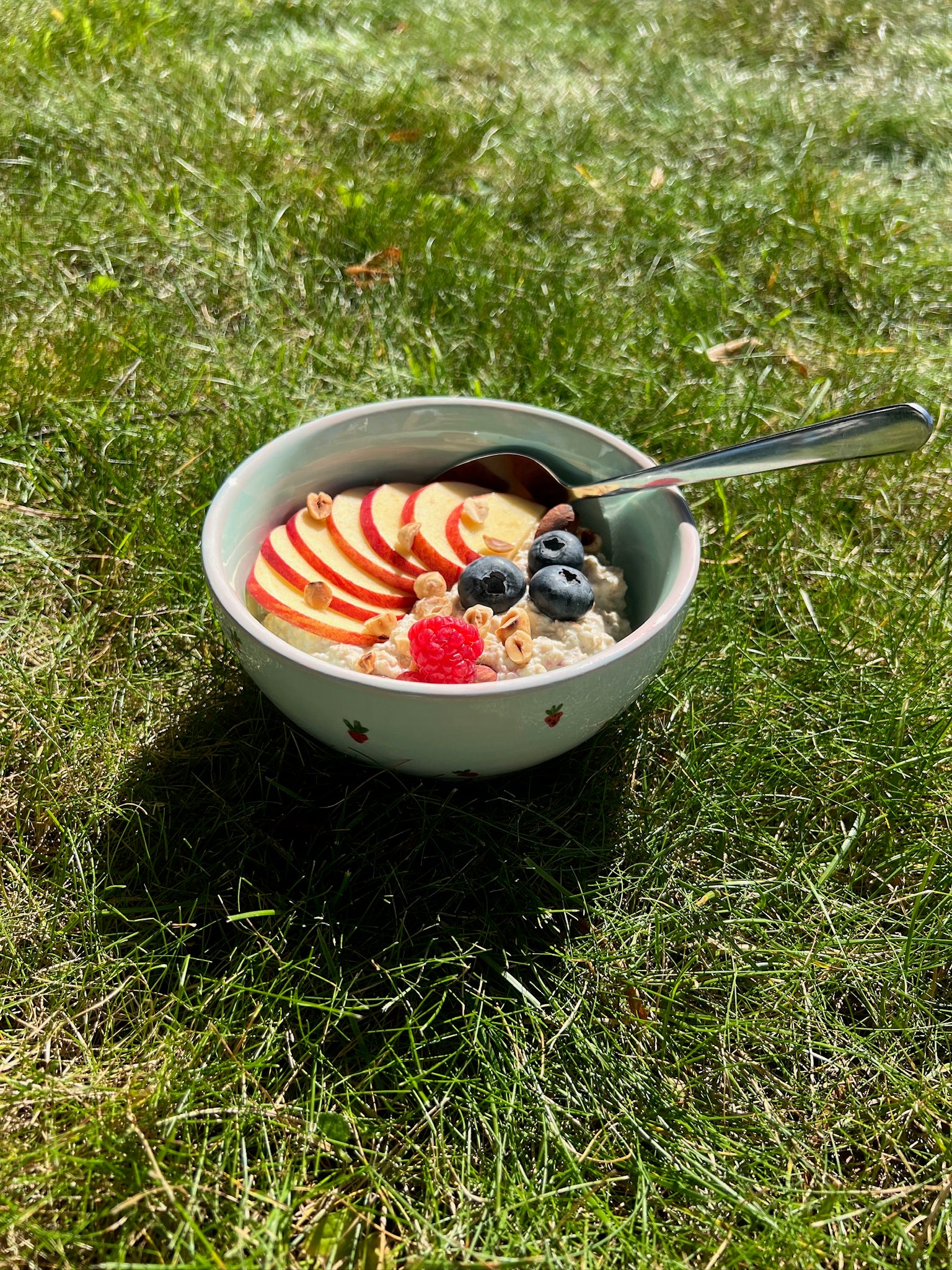
Always just the way you like it. Topped with fresh fruit or natural yoghurt for extra enjoyment.

Warm with hot water or milk

Cold as overnight oats: soak in the fridge overnight

Keeps you fuelled for longer

Preparation

The porridge is ready in minutes and fits into your daily routine, whether as a classic breakfast or a quick snack before training.

Preparation

Step 1

Add around 60g (6 heaped tablespoons or 6 Wheycation scoops) to a bowl

Preparation

Step 2

Add around 90ml of warm or cold liquid (milk, water or plant-based drink)

Serve

Step 3

Stir and leave to soak for 3 to 5 minutes (with warm liquid) or overnight (with cold liquid, for overnight oats)

Enjoy your ready-to-eat porridge

Protein, oats and real fruit. Nothing more needed.

No added sugar, no artificial flavourings, no compromise. Our Protein Porridge delivers what it promises: long-lasting satiety, high-quality protein and authentic flavour.

Suisse Garantie certified whey protein from regional cheese production

High fibre content from Swiss oats for long-lasting satiety

Naturally sweet through real fruit, with no added sugar or sweeteners

What you need to know about protein

View all

Kohlenhydrate und Zucker im Proteinpulver: sinnvoll oder problematisch?

Kohlenhydrate und Zucker im Proteinpulver: sinnvoll oder problematisch?

Viele Proteinpulver setzen auf möglichst wenig Kohlenhydrate. Wir gehen bewusst einen anderen Weg: Die enthaltenen Kohlenhydrate stammen entweder natürlich aus der Molke oder werden gezielt und sparsam eingesetzt – für Produkte, die nicht nur im Training, sondern auch im Alltag sinnvoll funktionieren.

Read more

Aminosäuren im praktischen Einsatz - Teil 2: Herzgesundheit

Aminosäuren im praktischen Einsatz - Teil 2: Herzgesundheit

Gastbeitrag von Ingo Schwabbaur, HolisticaFit & Consulting

Moderne Herz-Kreislauf-Prävention denkt weiter als bis zum Cholesterinwert. Der Muskel- und Energiestoffwechsel rückt zunehmend ins Zentrum – und mit ihm die Rolle hochwertiger Proteine und Aminosäuren. Dieser Beitrag beleuchtet ihre Bedeutung für Gefässe, Stoffwechsel und langfristige Herzgesundheit.

Read more

Proteinbedarf: Wie viel Protein pro Tag - und wann einnehmen?

Protein requirements: How much protein per day – and when should it be taken?

Protein is no longer just a topic for strength athletes. Whether in everyday life, during endurance sports, strength training, or recovery phases – proteins play a central role in our bodies. But two questions keep coming up: How much protein...

Read more

Aminosäuren

Amino acids in practical use - Part 1: Immune system

Guest article by Ingo Schwabbaur, HolisticaFit & Consulting

In a short series of articles, Ingo Schwabbaur offers a new perspective on how essential proteins are for everyone, regardless of activity level. The idea that proteins are only important in connection with sports is too simplistic.

Read more

Protein Isolat oder Hydrolysat – braucht’s das wirklich?

Protein isolate or hydrolysate – is it really necessary?

Not all whey protein is created equal. Anyone in the fitness or nutrition space quickly encounters terms like isolate or hydrolysate – they sound technical, performance-driven, advanced, and are often marketed as the superior forms of protein. But are they really the better choice?

Read more

Whey What?! Alles, was du über Whey, Molke, Protein und Wheycation wissen musst.

Whey What?! Everything you need to know about whey, protein, and wheycation.

Whey, protein, whey protein – these terms are cropping up more and more in the world of nutrition. But what do they actually mean? Why is whey so special, and why did we call our company «Wheycation»? Let us shed...

Read more

Neue Empfehlungen zur Proteinzufuhr nötig?

Are new recommendations for protein intake necessary?

The development of protein intake recommendations has evolved historically, with a single individual, Henry Sherman, having a significant influence. Sherman, an American scientist, published his textbook on nutrition at the beginning of the 20th century, which was considered a standard...

Read more

Upcycling von Schweizer Molke – unsere Proteinquelle

Upcycling Swiss whey – our protein source

When we launched Wheycation, we asked ourselves a lot of questions: Why don't we, as a cheese-making country, make better use of the whey produced during cheese production? Why doesn't the protein in so many functional products come from Switzerland?...

Read more

Der Unterschied von tierischen und pflanzlichen Proteinen

The difference between animal and plant proteins

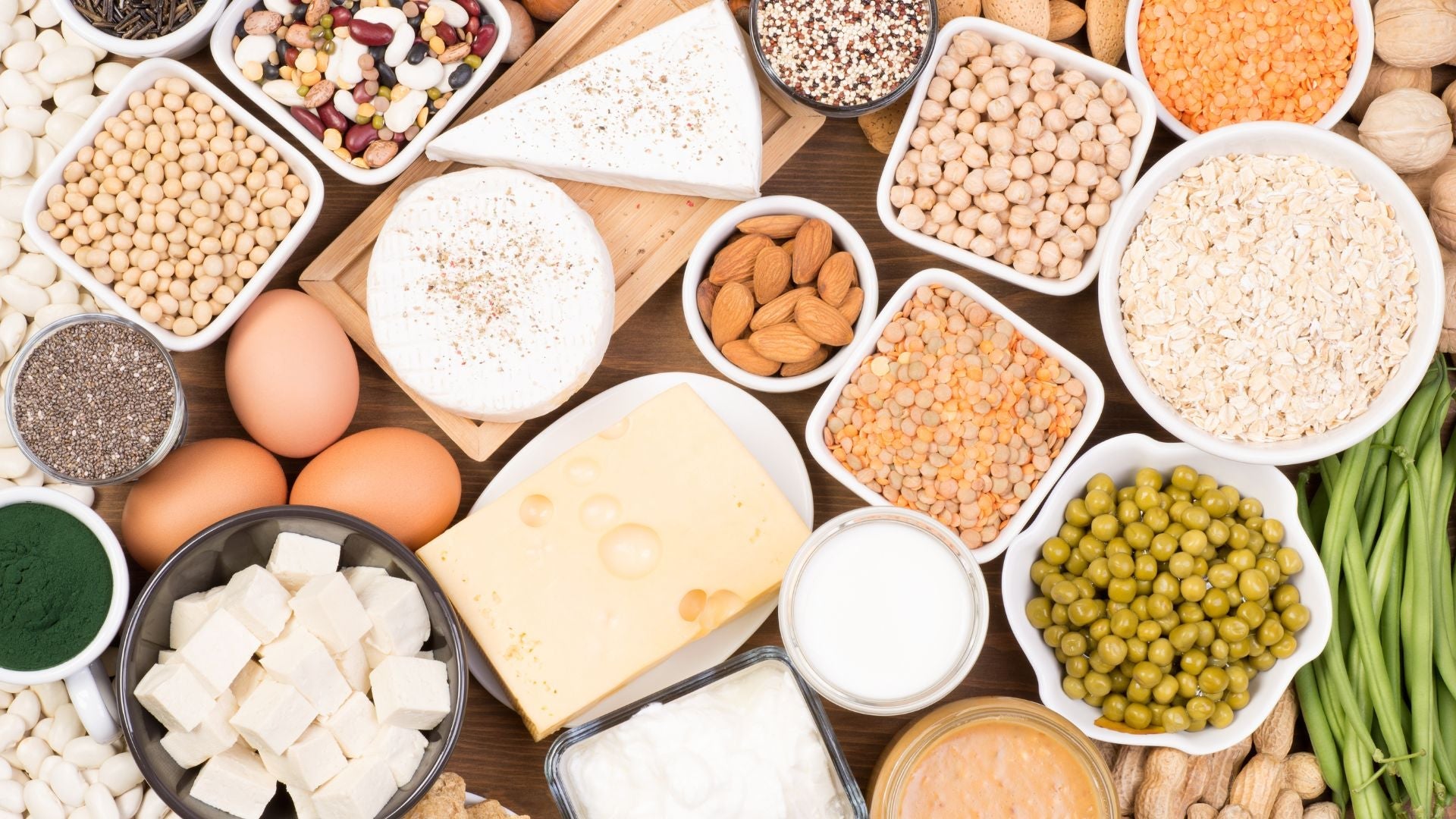
Proteins are fundamental building blocks of life that perform a variety of important functions in our bodies. They are essential for building and repairing tissues, producing enzymes and hormones, and strengthening our immune system. Bioavailability and the number of amino...

Read more

Frequently asked questions about our Protein Porridges

Is the porridge gluten-free?

Our protein porridges contain oats that are not certified gluten-free. While oats themselves do not naturally contain gluten, cross-contamination with wheat can occur during harvesting and processing. As a result, we cannot guarantee that the product is completely gluten-free. Only specially certified oats may be labeled as gluten-free.

How do I prepare the porridge?

The easiest way to prepare it is with water, but depending on your personal preference, you can also use milk or a milk substitute, e.g. oat drink. For an average portion, 60 g are measured into a small bowl, which is about 6 tablespoons. Then pour approximately 90 ml of warm to hot liquid over it. If you don't want to measure, the 90 ml will just about cover the 60 g mixture. Leave to stand for approximately 3 - 5 minutes, then the porridge is ready to eat.

Tip: Refine the porridge with fresh fruit and a little natural yoghurt.

Of course, the preparation also works in the same way as you are used to with other porridges.

Can I also prepare the porridge cold?

Yes! For a cold version you can mix the porridge with cold milk, water or plant-based drink and leave to soak for a few minutes. For overnight oats, simply leave to soak overnight in the fridge - perfect for a refreshing breakfast

How long will the porridge keep me full?

Thanks to the combination of complex carbohydrates, high-quality proteins and fiber, the porridge keeps you full for hours - ideal for an energy-rich breakfast or long-lasting satiety on the go.

How much lactose is in the Protein Porridge?

The Protein Porridge contains approximately 1.6 g of lactose per 100 g, which is about 1 g of lactose per serving (60 g).

What is lactose?

Lactose is milk sugar that naturally occurs in milk and whey. Since our protein powder is made from whey, it may contain traces of lactose.

Why is whey used as a source of protein?

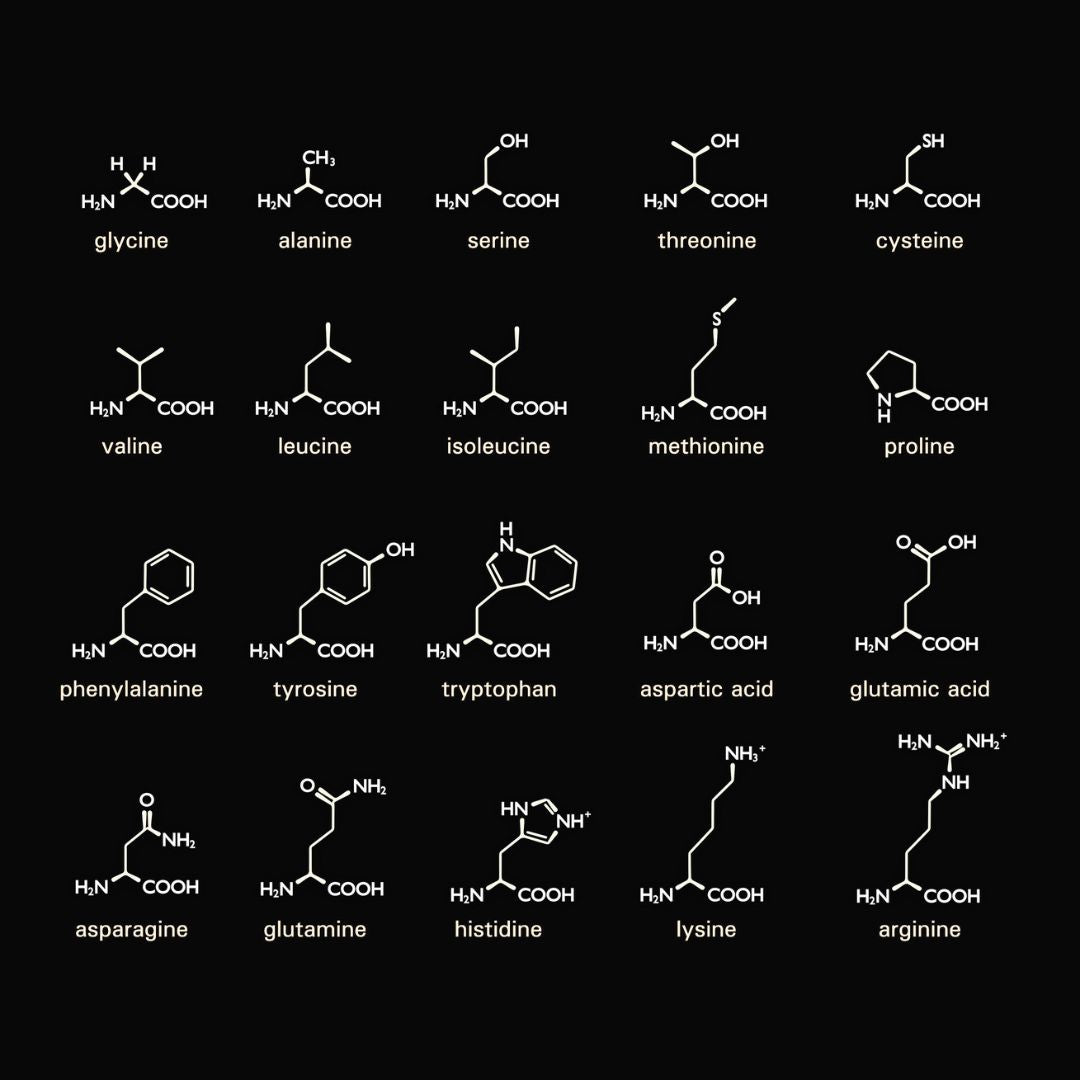
Whey is one of the best natural sources of protein, as it contains all the essential amino acids and is particularly easy to digest. By using Swiss whey, we are also actively committed to sustainable food production and the reduction of food waste.

What is whey?

Whey, also known as "Schotte" in German, is the liquid that remains after milk has been processed during cheese production. It contains the components of milk that do not end up in the cheese. Whey is rich in high-quality whey proteins, which contain all essential amino acids and are easily absorbed by the human body.

Whey also naturally contains valuable vitamins and minerals. You can find detailed information about whey and its health benefits in our Guidebook.

How exactly do Wheycation products support physical recovery, preparation for exertion, and the promotion of overall well-being?

Whey proteins play a key role in supporting physical recovery. For us, it is not only important to achieve high protein content in our products, but also to ensure a balanced composition. A healthy diet is a balanced and varied diet. That’s why our products are primarily natural and contain a well-balanced ratio of macronutrients (proteins, carbohydrates, and fats) and micronutrients (minerals and vitamins).

Prepare products, designed for preparation before physical exertion, are also rich in protein but contain more carbohydrates and dietary fiber compared to recovery products. This ensures they provide longer-lasting satiety and sufficient energy.

The natural quality of our products is the main factor in promoting well-being, supported by ingredients that contribute to gut health. Enjoyment is essential as well, to help the mind relax. Our products embody a carefree approach to nutrition.

You can find more detailed information on nutrition and tolerability in our guidebook.

What is upcycling and how does Wheycation contribute to avoiding food waste?

Upcycling refers to a process of material enhancement, where materials are transformed into higher-value products. In the context of food, upcycling means using raw materials as ingredients that would otherwise not be consumed by humans and thus would be lost as food waste.

According to estimates by the Food and Agriculture Organization (FAO) of the United Nations, about one-third of all food produced worldwide is lost or wasted each year. These losses account for around 8 percent of greenhouse gas emissions caused by human activity, significantly contributing to climate change. (Source: Bundesamt für Lebensmittelsicherheit und Veterinärwesen)

In Switzerland, about 75 percent of whey is not consumed by humans. Through upcycling, we rescue Swiss whey, prevent its waste, and thus help reduce food waste while contributing to the fight against climate change.

You can find detailed information on environmental regeneration in our guidebook.

Got more questions?

Get in touch and we'll happily answer any questions you have. Drop us a message here.