
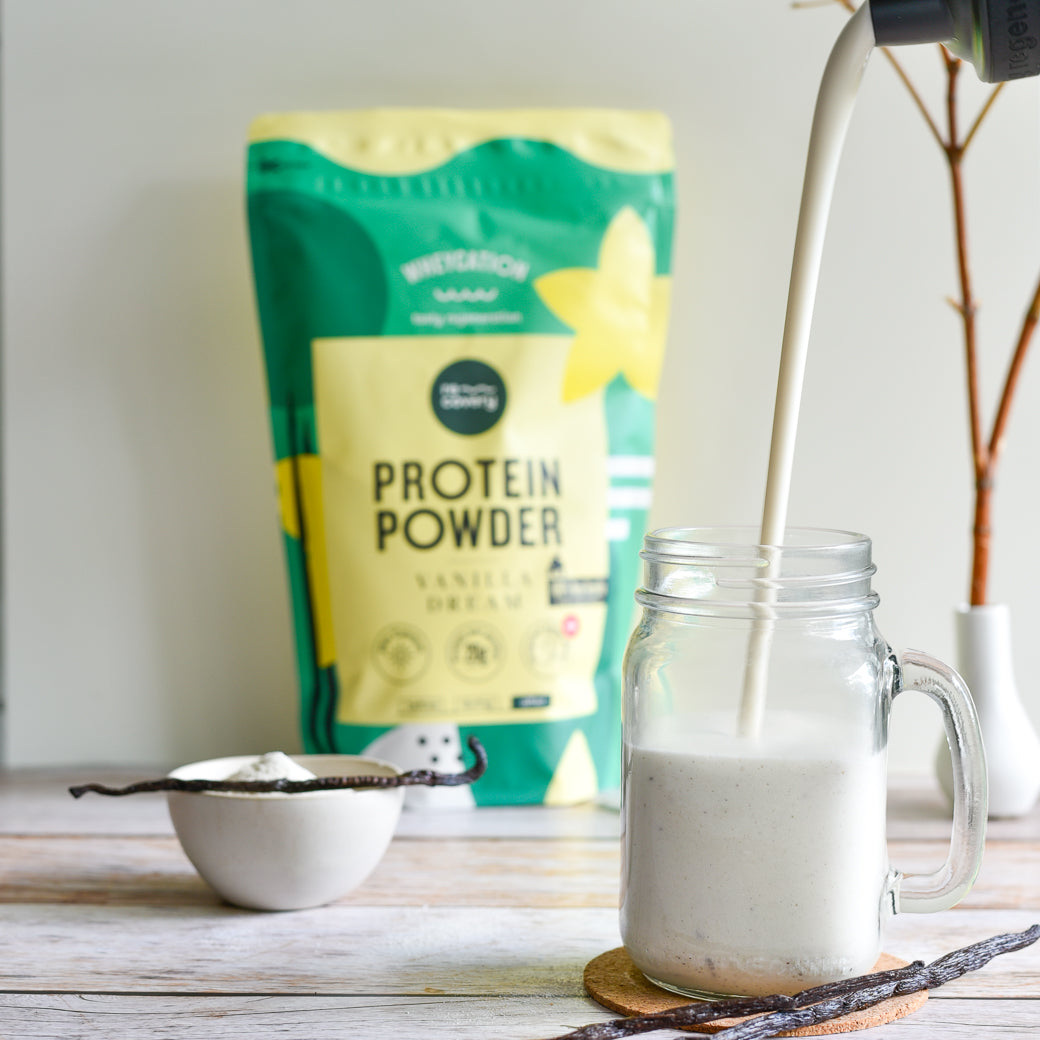
Whey is the liquid left over from milk during the production of cheese. Everything from the milk that does not end up in the cheese is found in the whey. It consists of approximately 94 percent water, 4.5 percent lactose, 0.8 percent proteins, 0.7 percent minerals and vitamins, and is virtually fat-free. Depending on the type of cheese produced, the whey can vary, particularly in flavour.
Since Switzerland produces a very large amount of cheese, a correspondingly large amount of whey is generated — around 1.3 million tonnes per year. Wheycation uses this surplus Swiss whey to create high-quality Swiss whey protein: a sustainable upcycling product made from one of the most valuable natural protein sources available. More on this in our blog post "Whey What?! Everything you need to know about whey, protein and Wheycation."
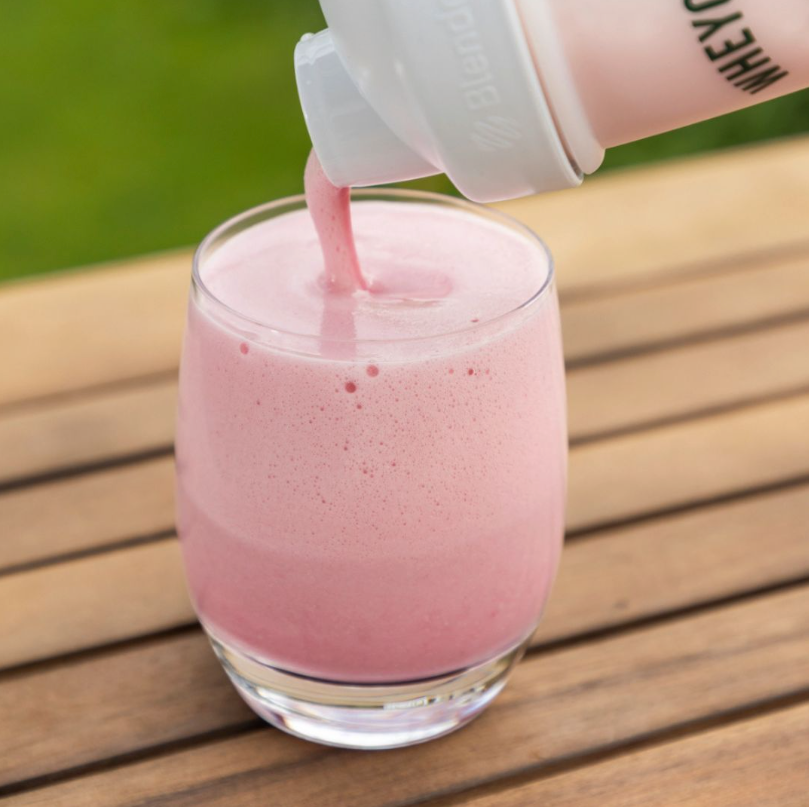
From a nutritional standpoint, whey is one of the highest-quality protein sources available. According to the latest findings, whey protein is the most nutritionally valuable protein currently available. It is therefore widely used in sports nutrition, clinical nutrition and infant formula. Whey proteins are highly satiating, yet quickly digestible and easily absorbed by the human body, with many positive functional properties. They are particularly significant for recovery. In the field of nutritional supplements, whey protein is most commonly known by its English name — whey protein, or simply whey.

How do whey proteins work?
The functional properties of whey proteins are wide-ranging. They contribute to muscle building and the inhibition of muscle protein breakdown, have antioxidant effects, and strengthen the immune system — particularly in combination with increased physical activity. Whey proteins also have a positive effect on gut flora, cardiovascular health and bone metabolism.
Protein quality is typically measured by biological value — an indicator of how effectively a dietary protein can replace body protein. Whey proteins have a very high biological value due to their high content of all essential amino acids: the protein building blocks the body cannot produce itself, yet requires for a healthy metabolism.
Whey also contains the minerals potassium, calcium and phosphorus, as well as vitamins B1, B2, B6, B12 and pantothenic acid in nutritionally relevant concentrations. Additional minerals and trace elements found in whey include magnesium, zinc, iron, copper and iodine. This list is not exhaustive — whey contains many more valuable, naturally occurring nutrients.
What makes Swiss whey special?
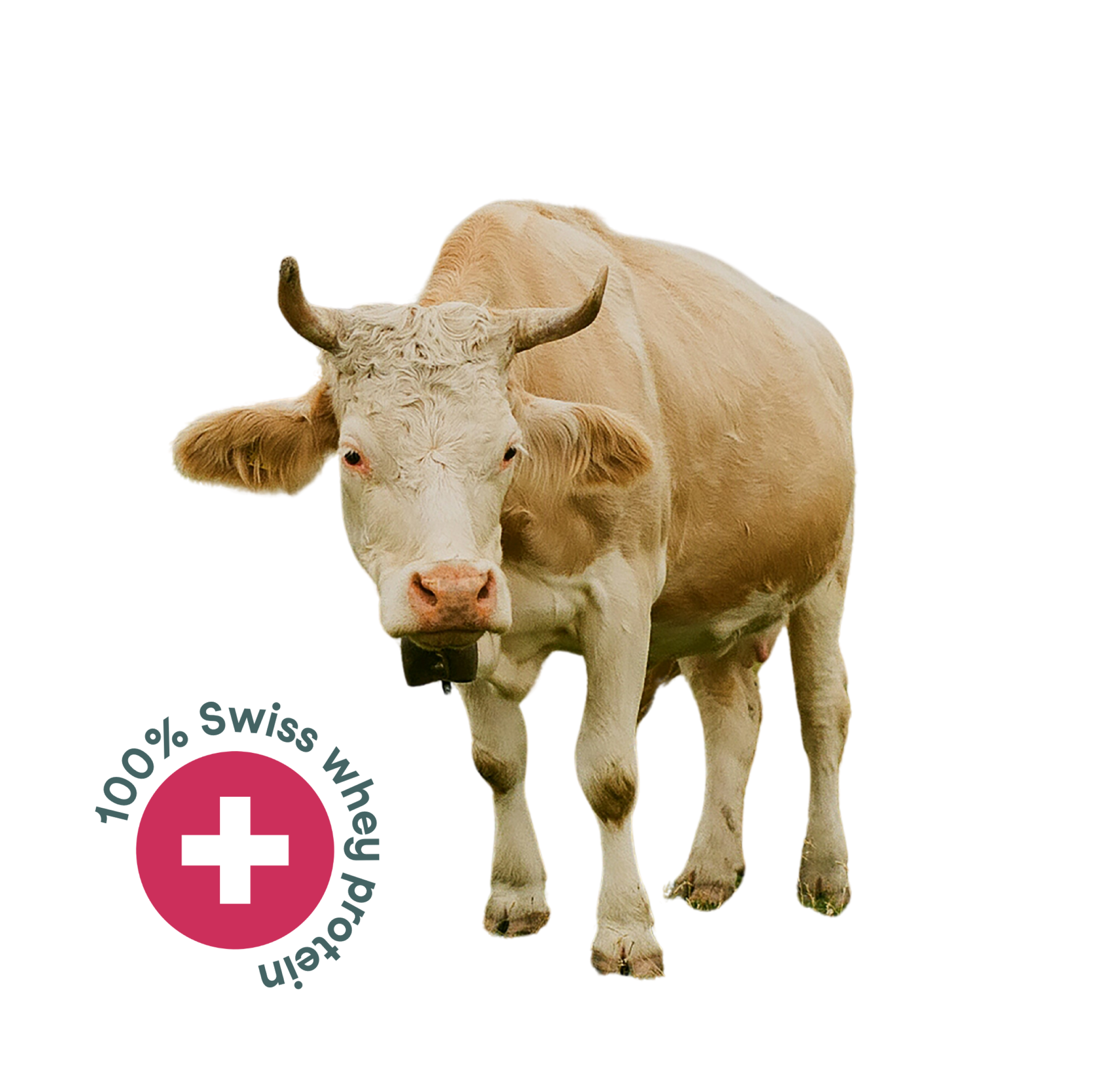
We work exclusively with Swiss whey. The Suisse Garantie certified whey protein we use in our Swiss protein powder is a concentrate derived from Swiss whey produced during cheese manufacturing. To produce this whey protein concentrate, the whey is gently filtered through membranes and then dried. The resulting concentrate consists of 80 percent protein, while still retaining the natural minerals and vitamins from the whey.
Buying Swiss whey protein from Wheycation means: regional, certified and free from artificial additives. Our protein powder from Swiss whey is available in our online shop in a range of flavours — for every active lifestyle.
Sources
Discover our products

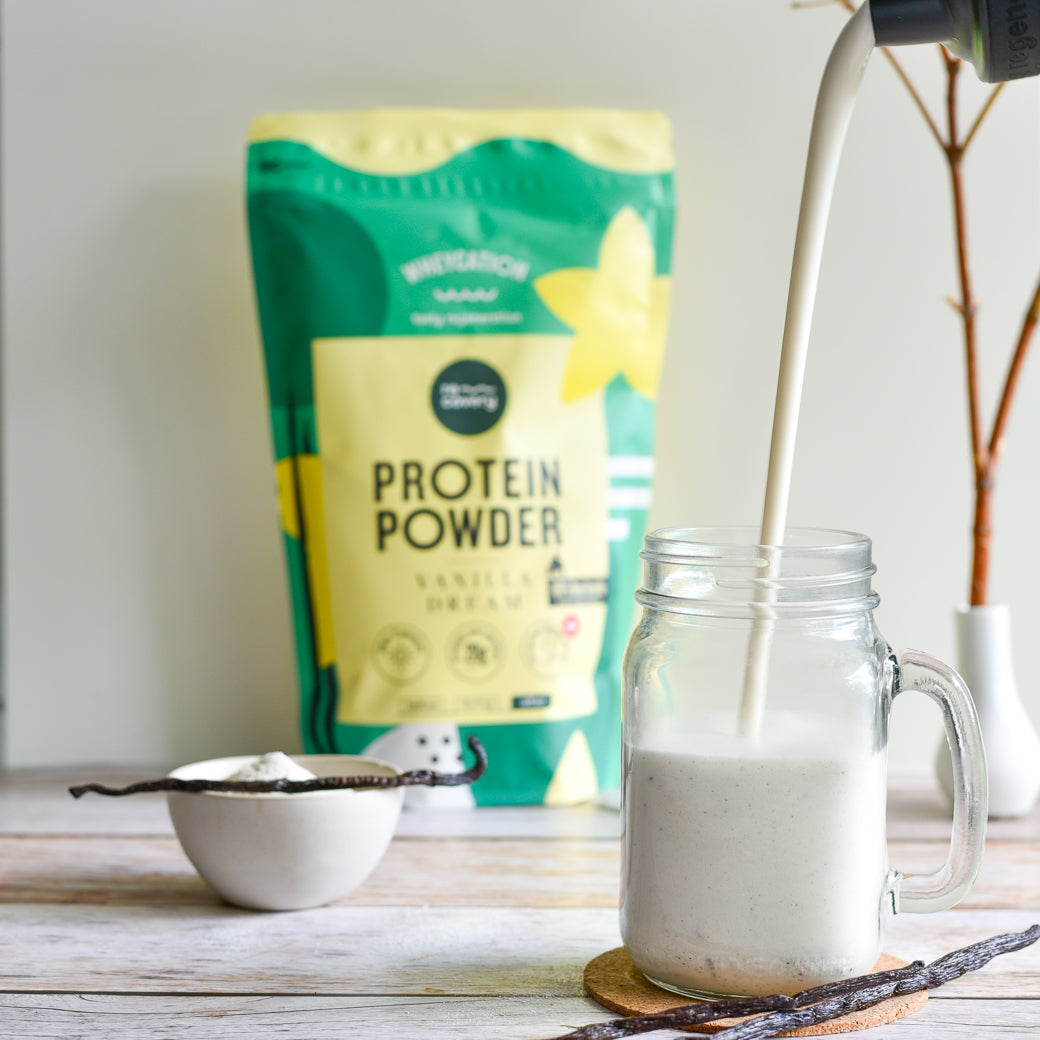


Whey Protein Powder Vanilla Dream 520g


Whey Protein Powder Cacao 520g


Whey Protein Powder Berries 520g
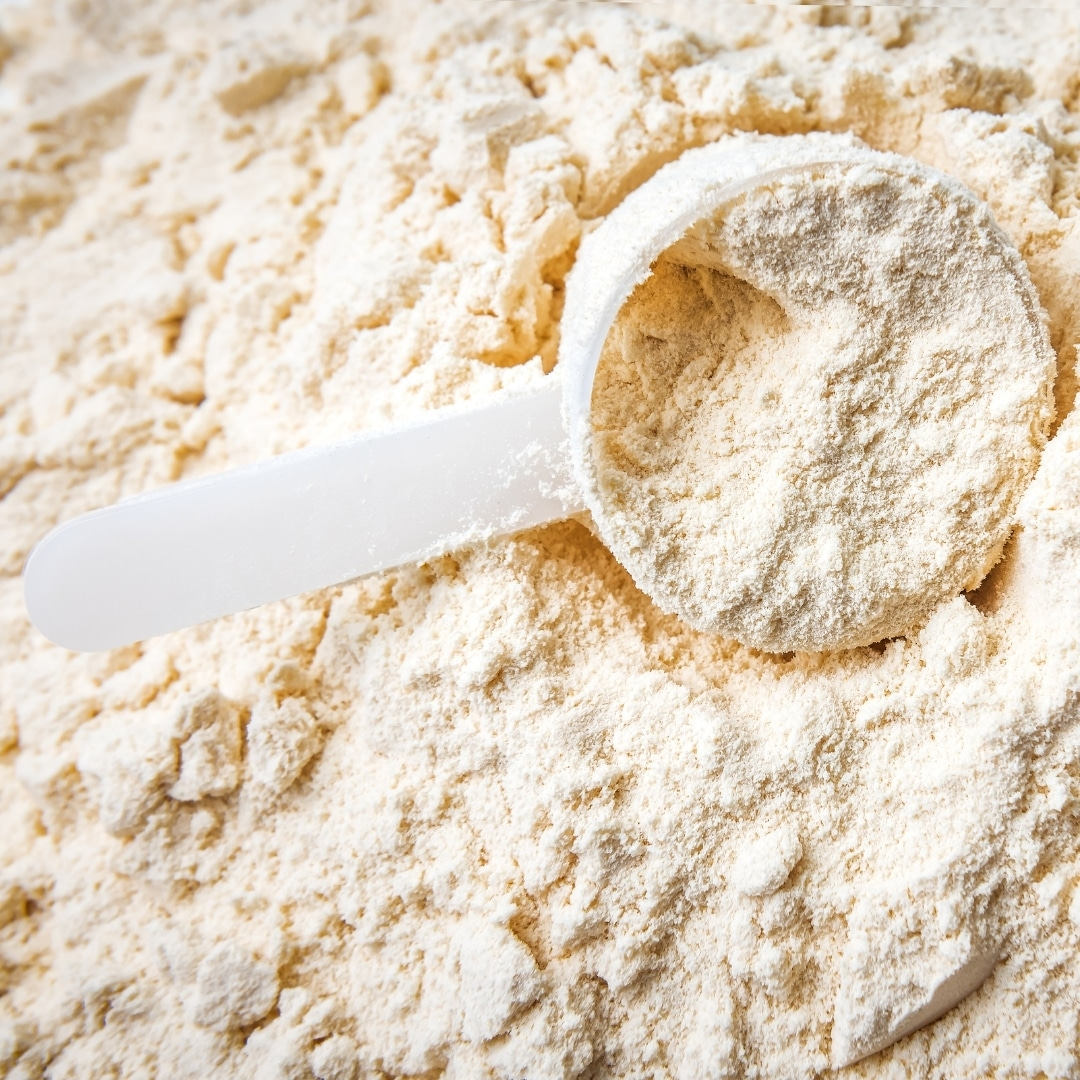
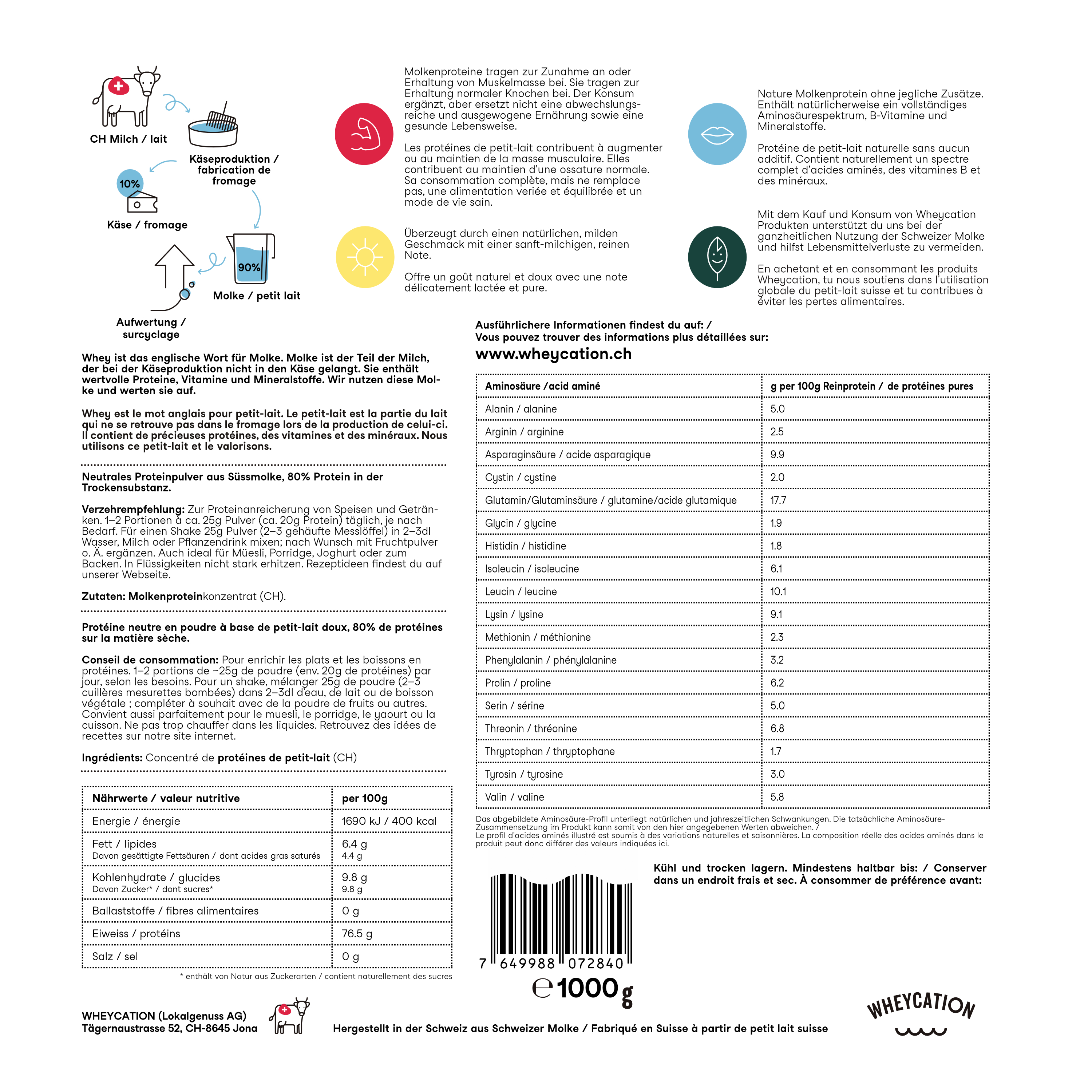
Whey Protein Powder Nature 1000g

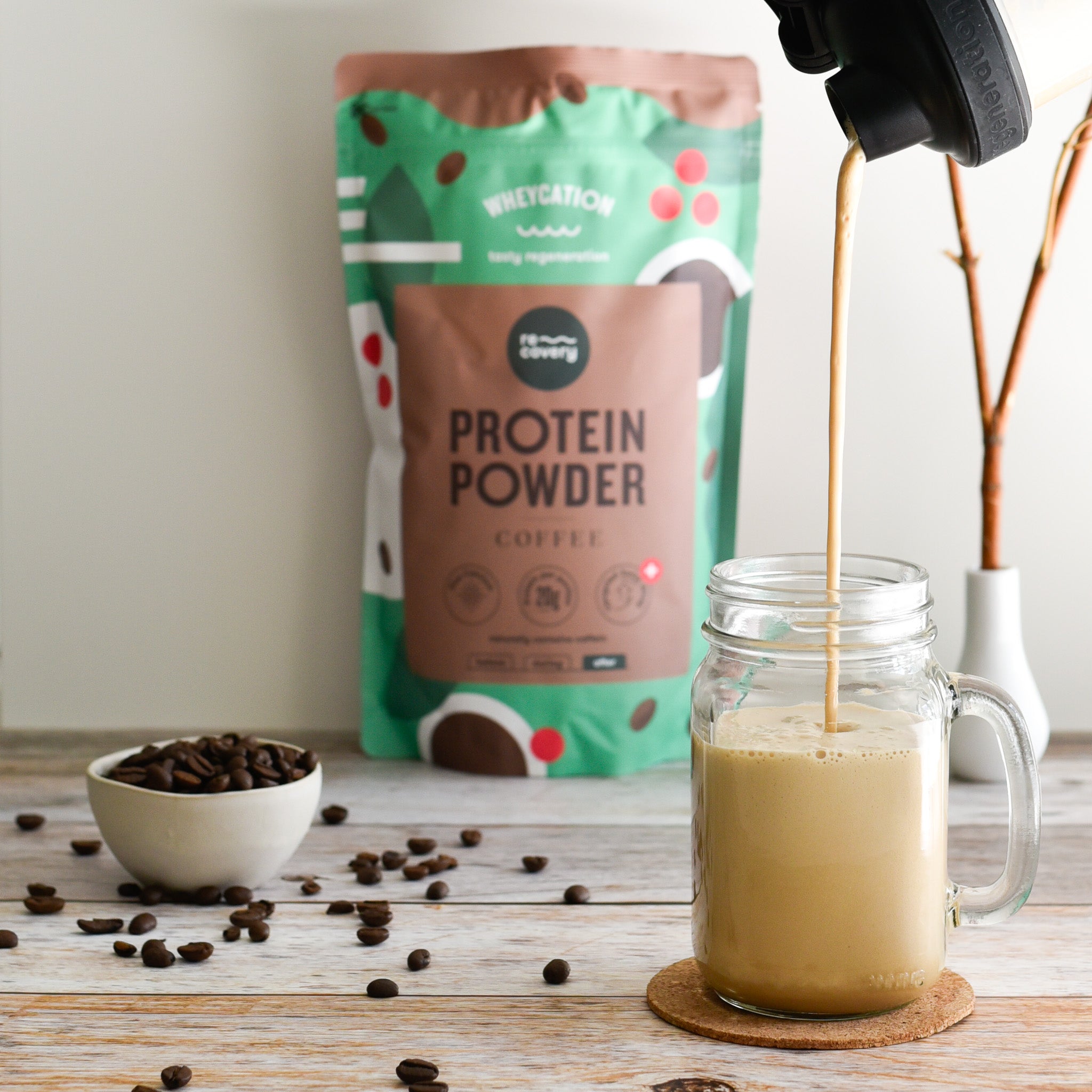

Whey Protein Powder Coffee 520g
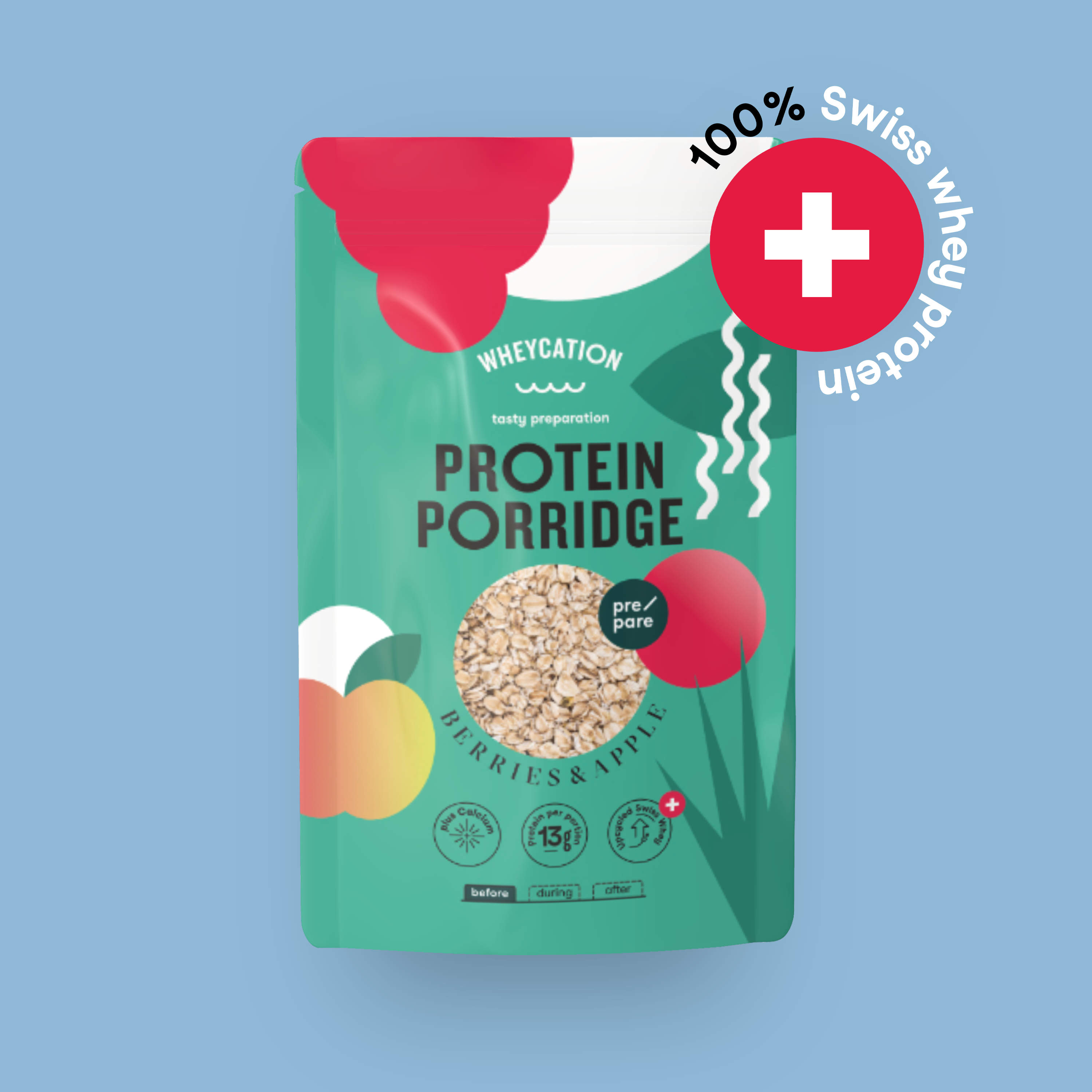
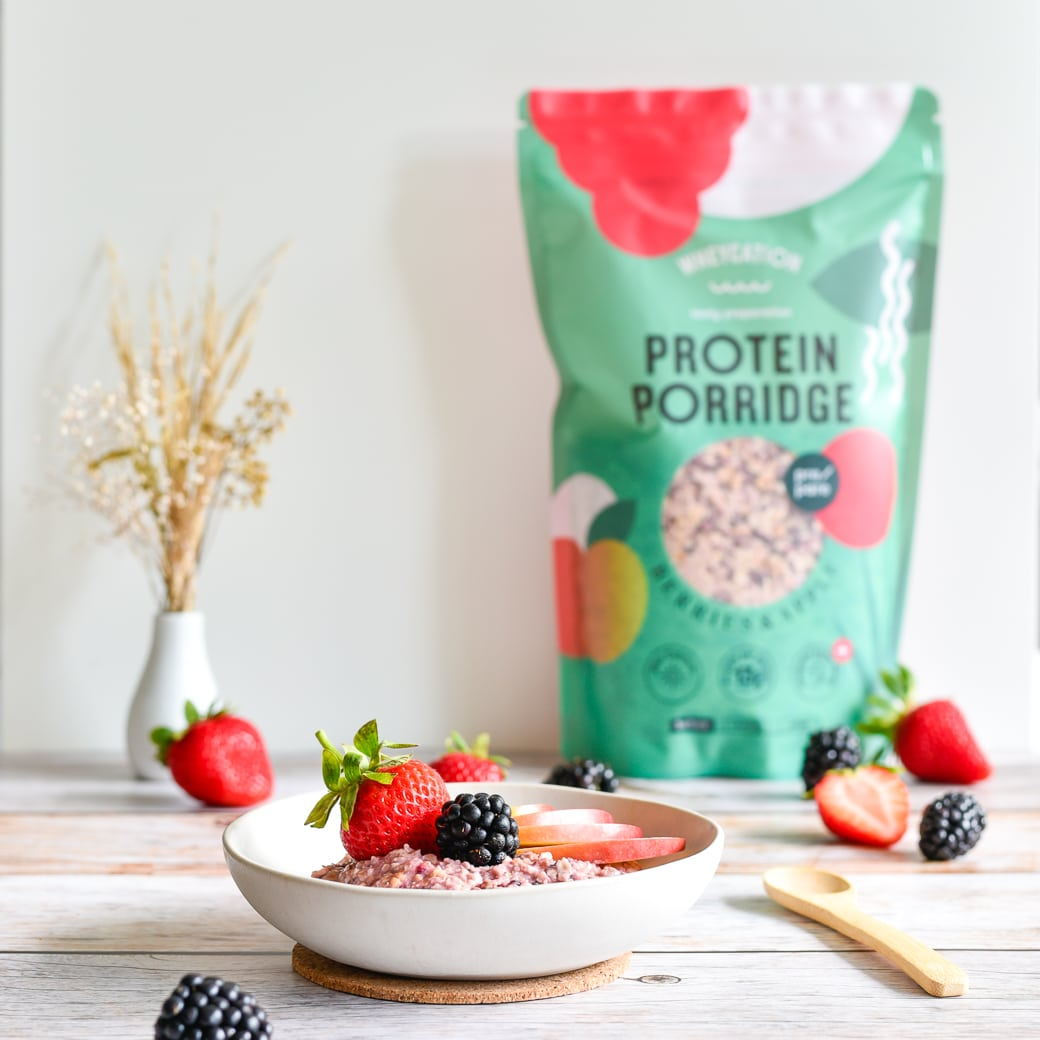

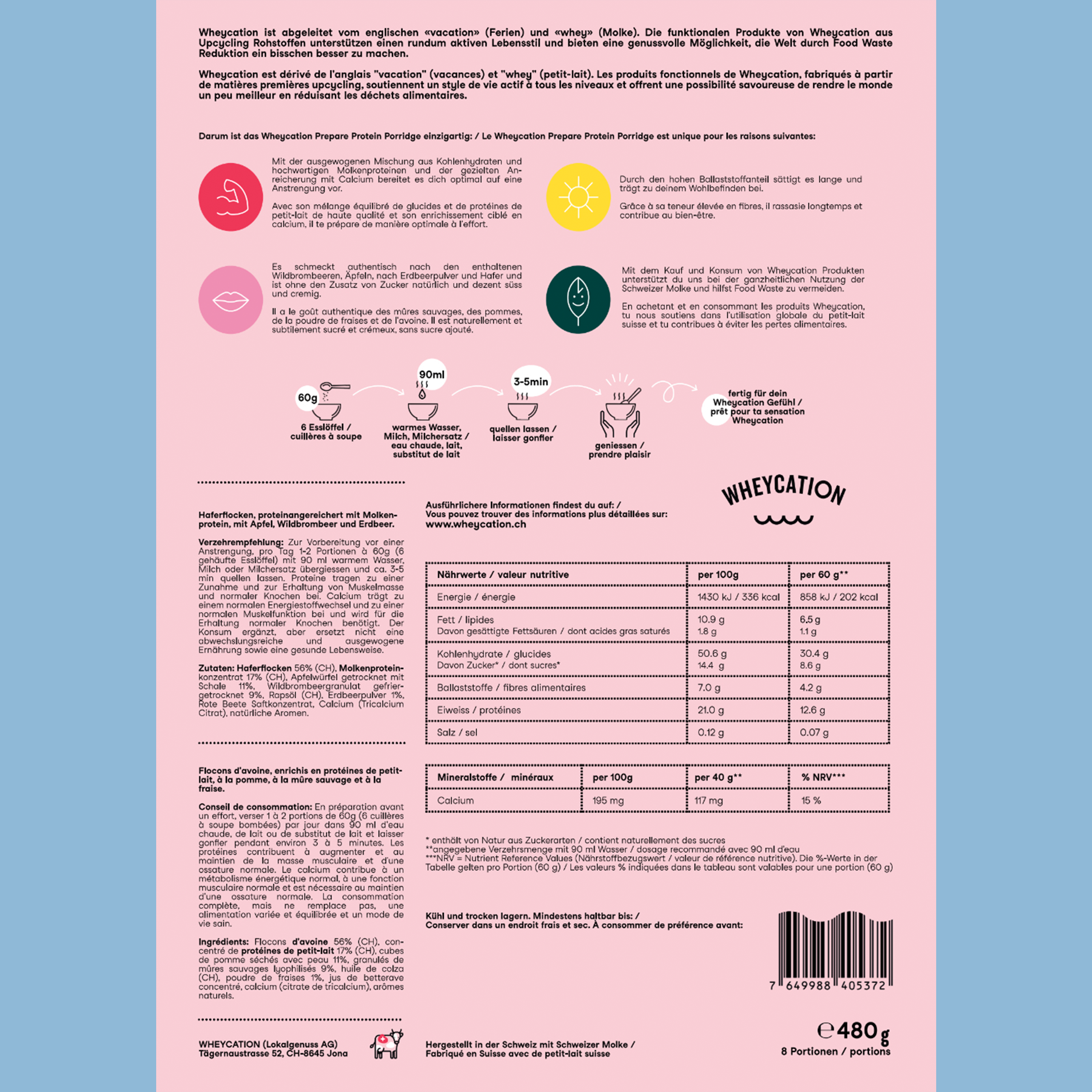
Whey Protein Porridge Berries & Apple 480g
Whey Protein Powder Vanilla Dream 520g

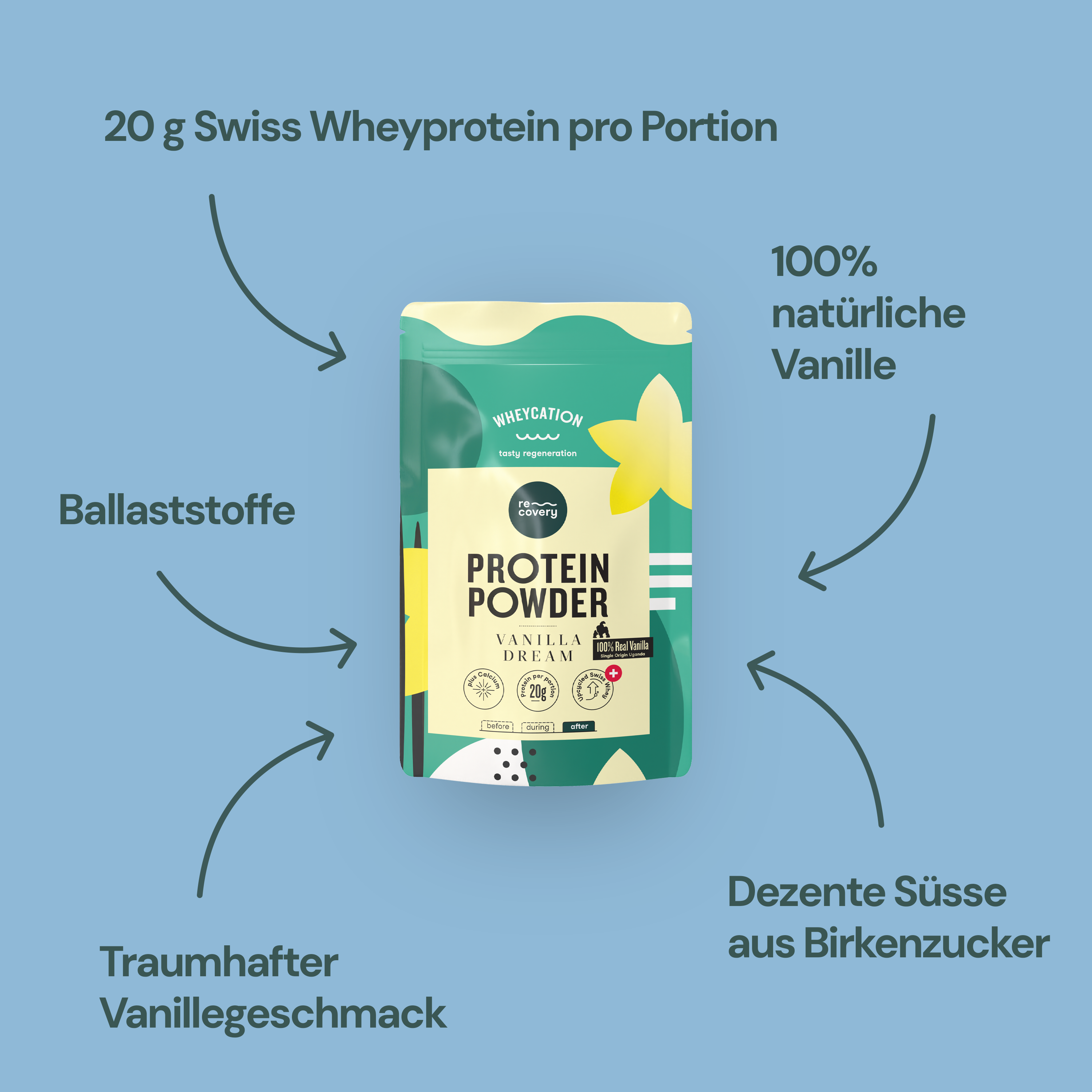
Whey Protein Powder Vanilla Dream 260g
Whey Protein Powder Coffee 520g


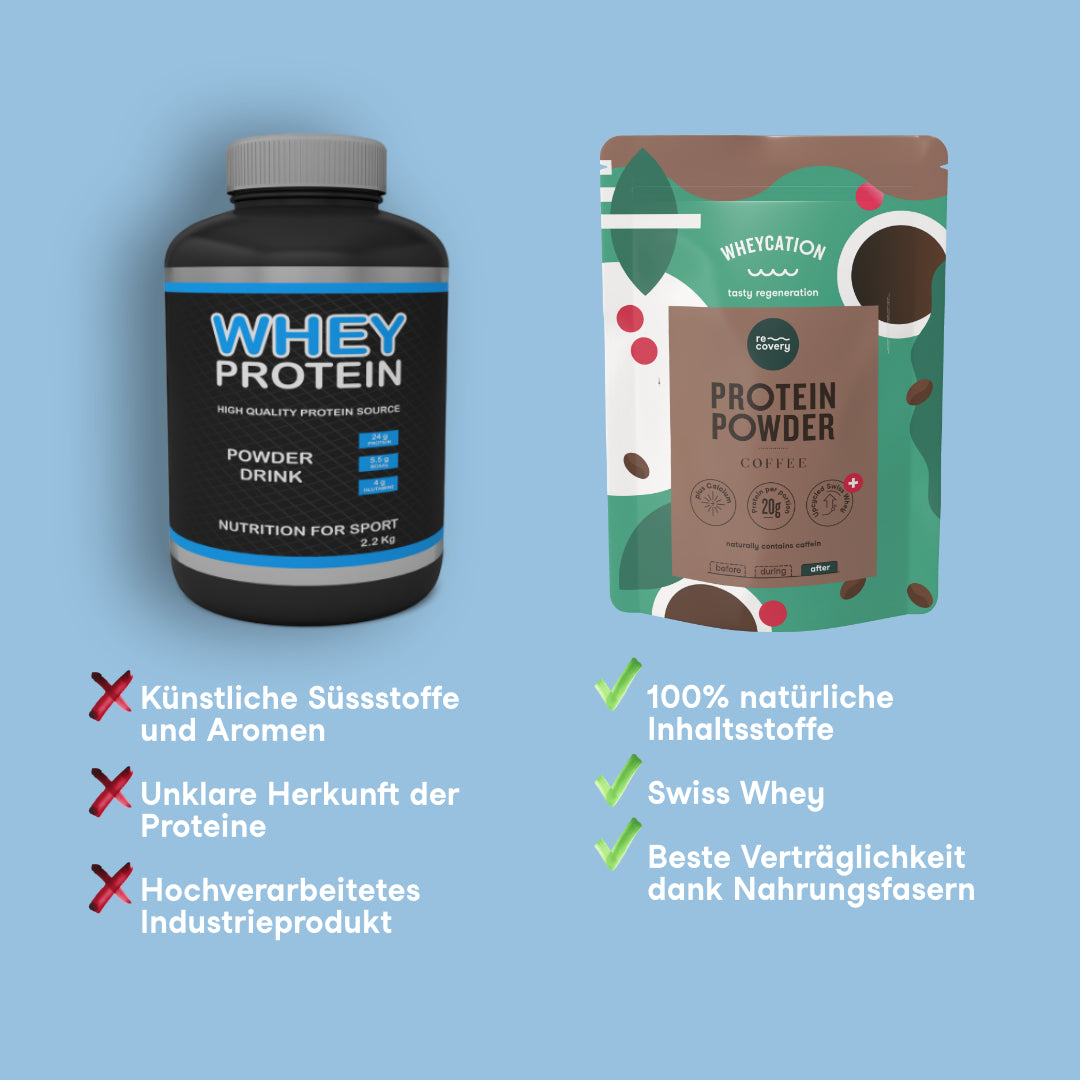
Whey Protein Powder Coffee 260g
Whey Protein Powder Cacao 520g
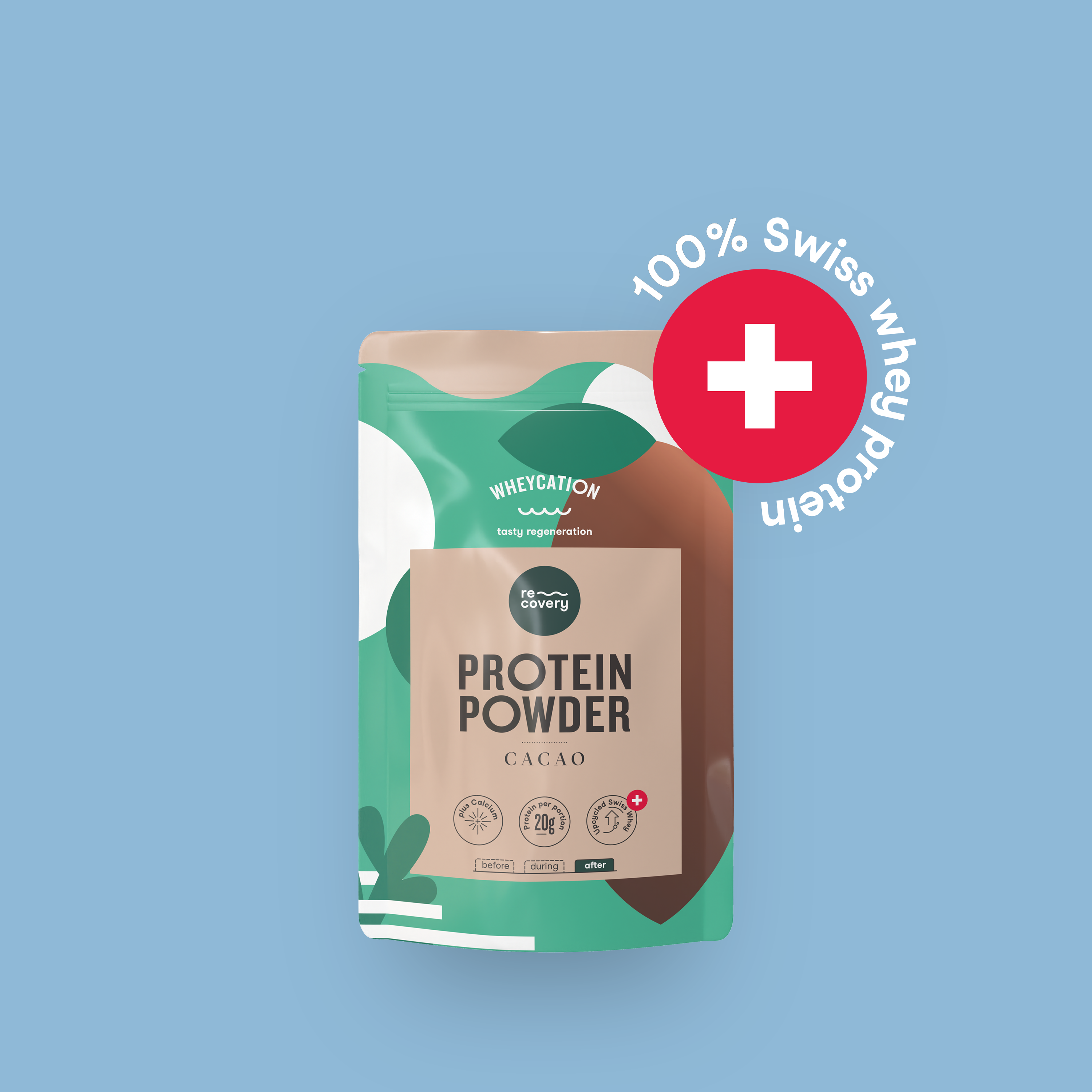
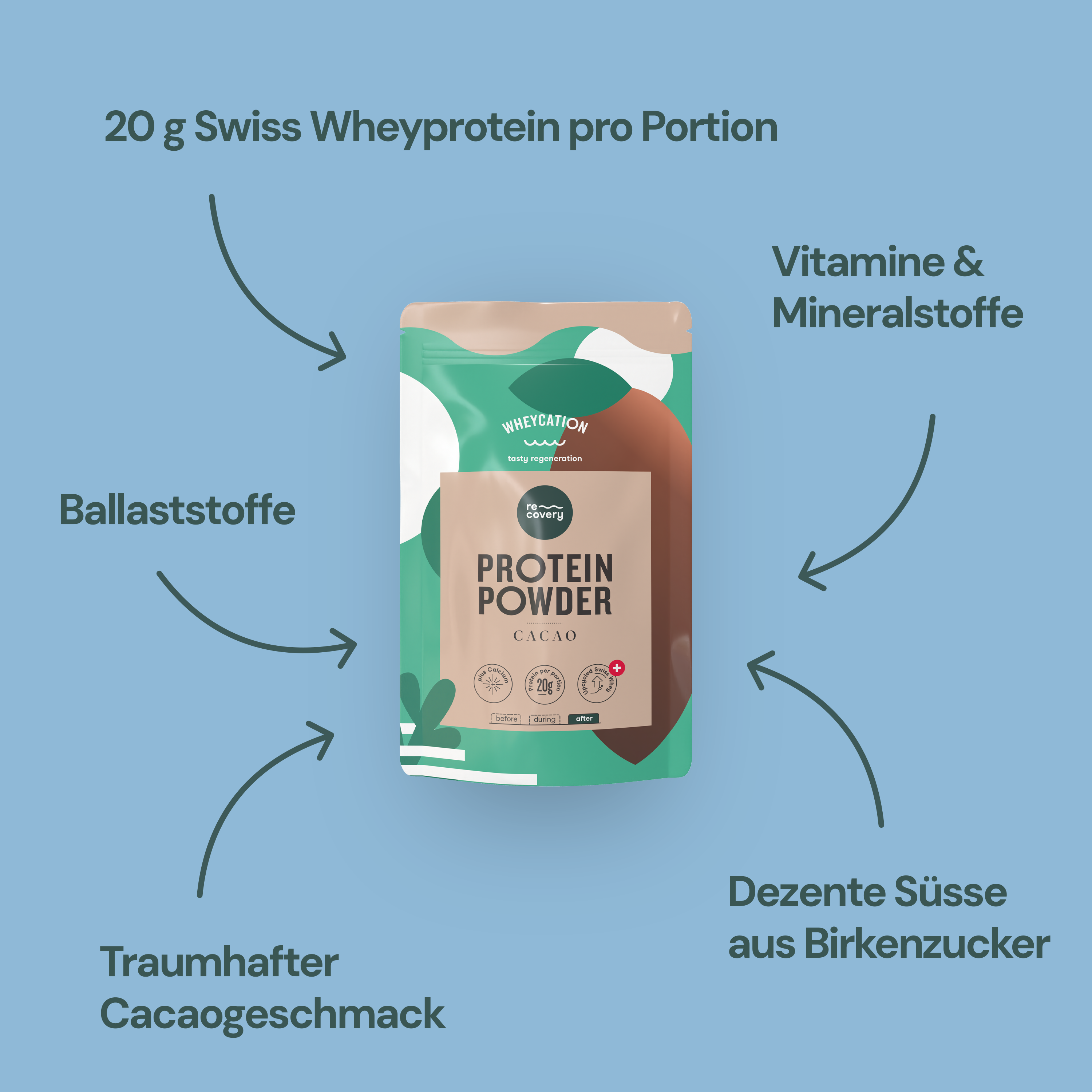
Whey Protein Powder Cacao 260g

Starter Set Whey Protein Powder 3x260g BERRIES-VANILLA-CACAO
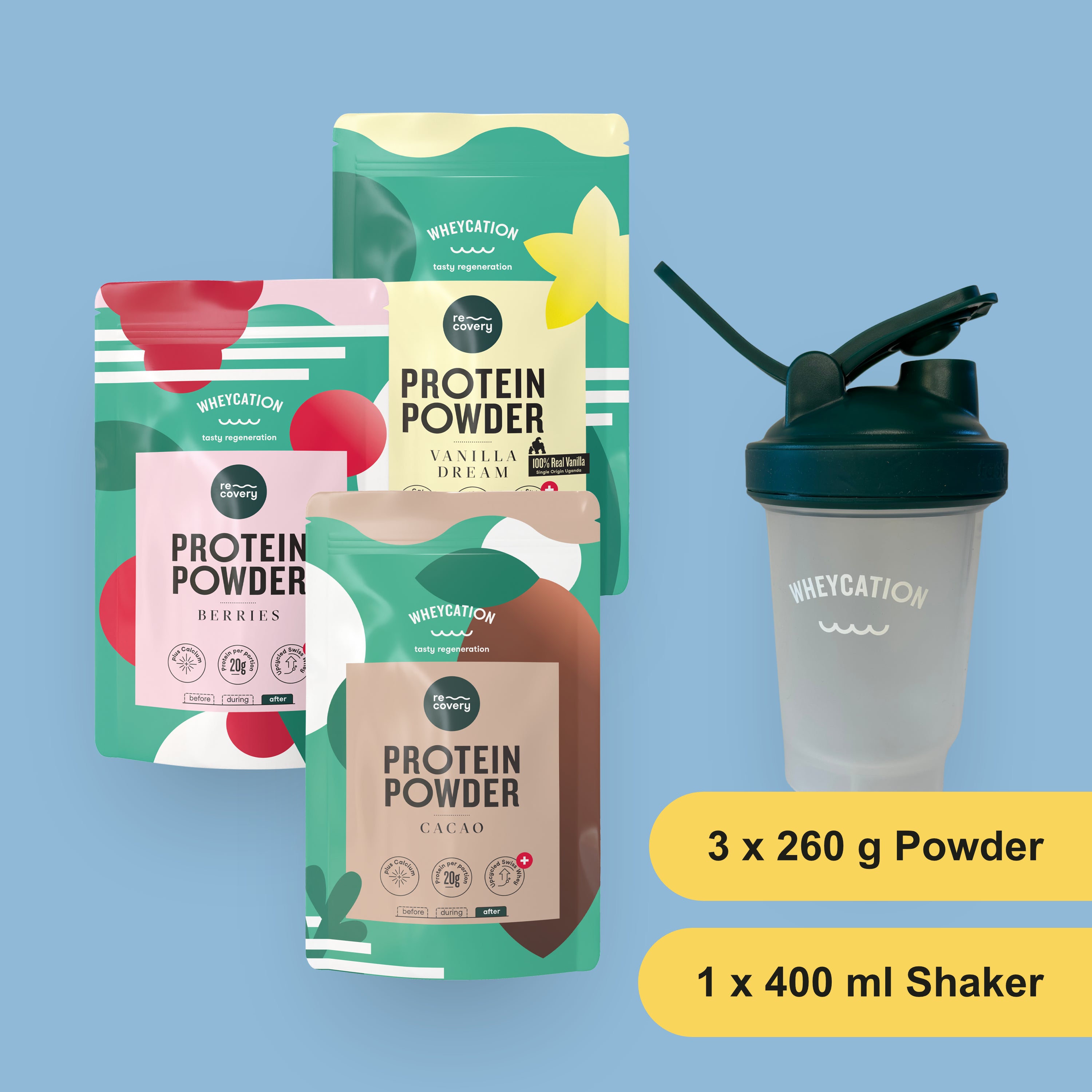
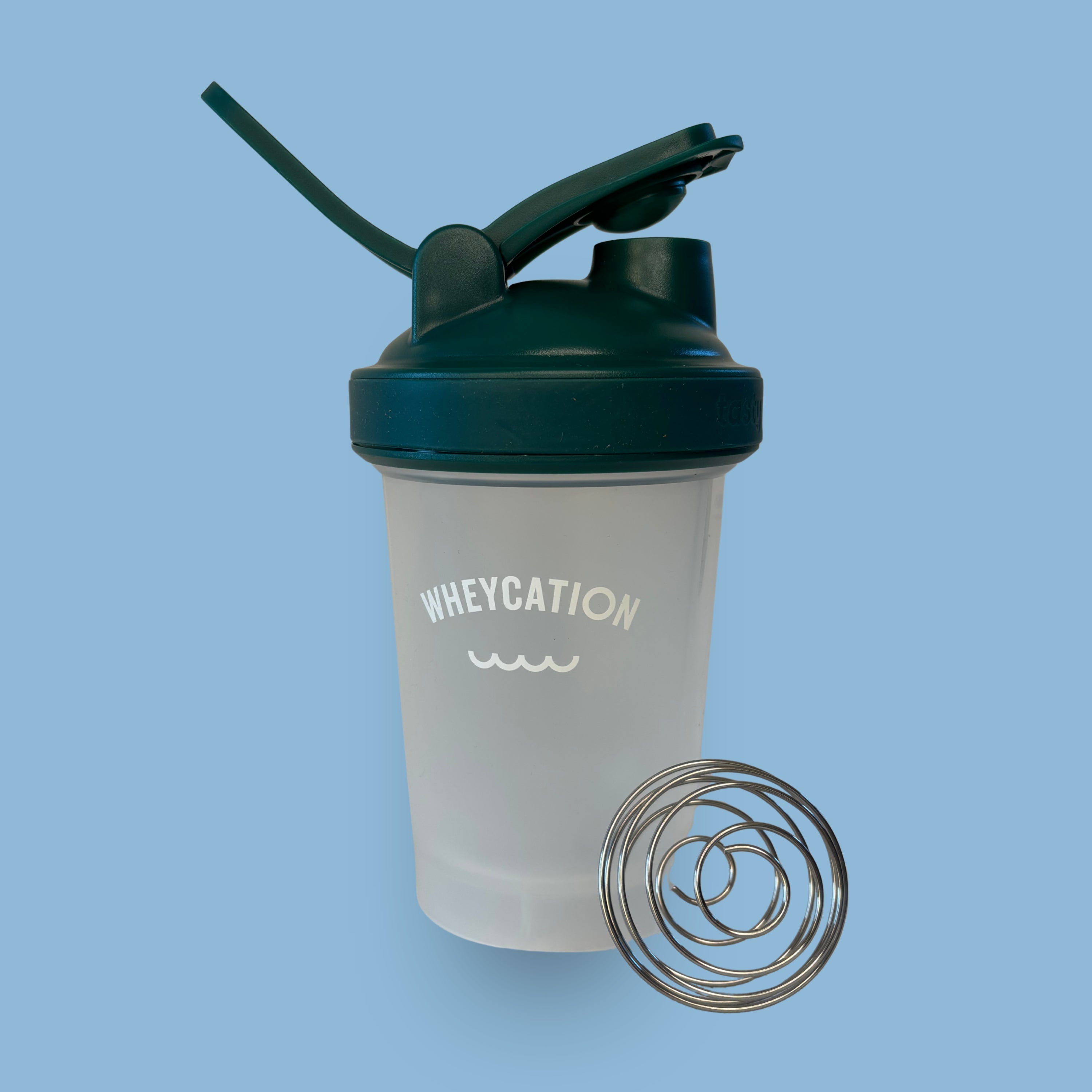
Starterset Whey Protein Powder 3x260g & Shaker


Recovery Bundle RecoBiotic Probiotic & Whey Protein Powder Berries

Starter Set Whey Protein Powder 3x260g CACAO-VANILLA-COFFEE

Recovery Bundle RecoBiotic Probiotic & Whey Protein Powder Vanilla Dream
Recovery Bundle RecoBiotic Probiotic & Whey Protein Powder Coffee
Whey Protein Porridge Berries & Apple 480g
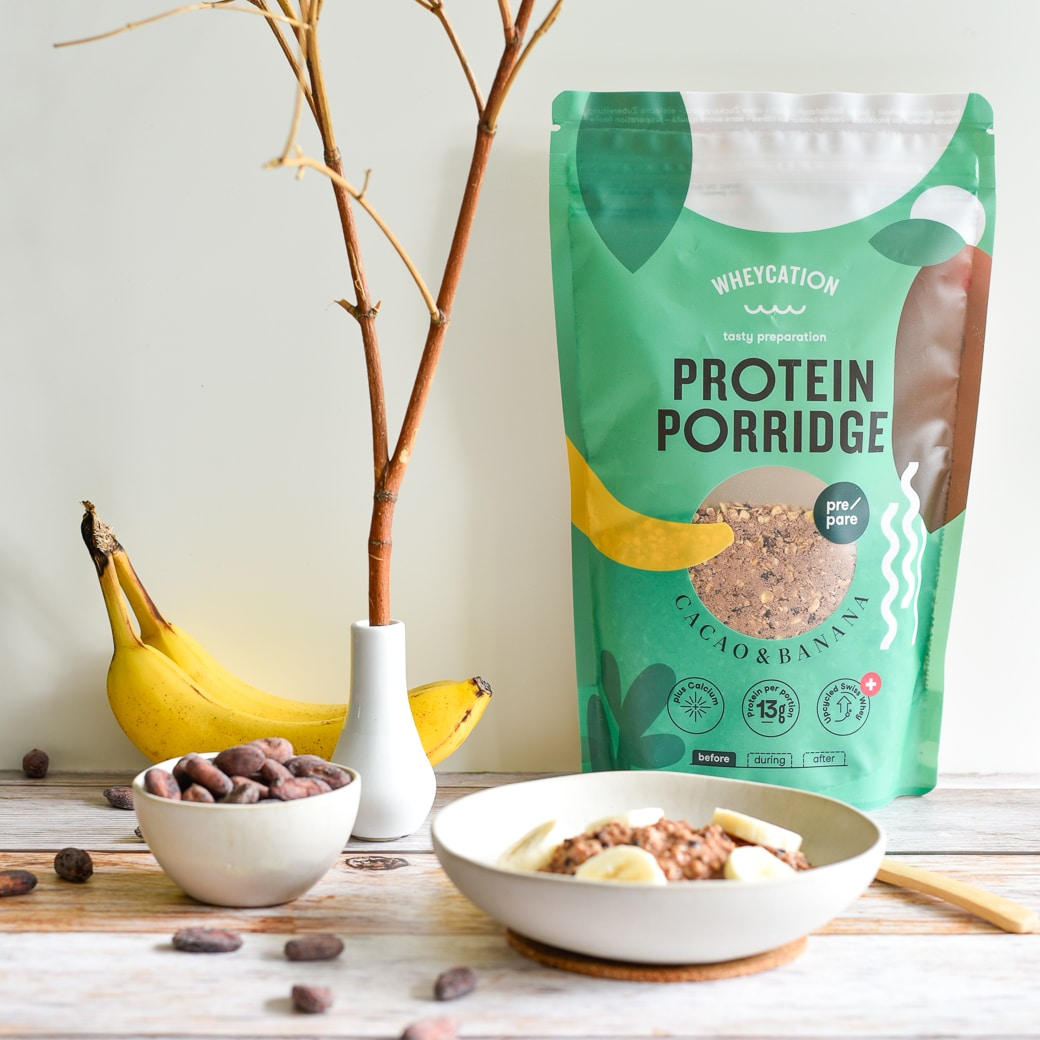
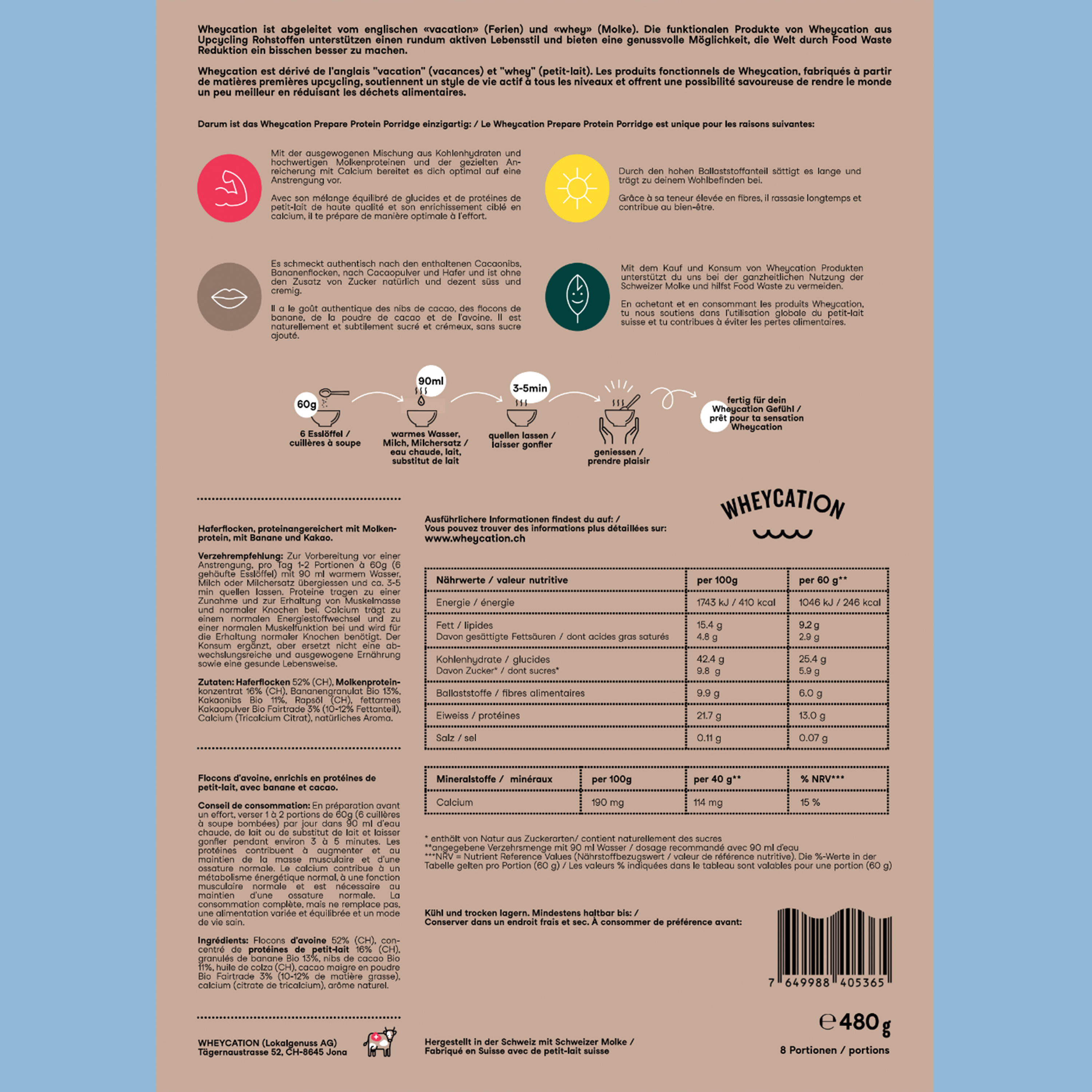
Whey Protein Porridge Cacao & Banana 480g


Isotonic Energy & Hydration Sports Drink Cherry 630g


Isotonic Energy & Hydration Sports Drink Lemon 630g


Isotonic Energy & Hydration Sports Drink Mate-Mint 630g
Frequently asked questions about Swiss whey and whey proteins
What is whey and why is whey healthy?
And what is the difference between whey powder, whey protein concentrate and whey protein isolate?
What is whey?
What is the difference between whey protein and casein?
Milk contains two main types of protein. Around 80 percent is casein and 20 percent is whey protein. During cheese production, the casein becomes the solid component — the cheese itself — while the whey remains in the liquid, known as whey. Whey protein contains all essential amino acids, is particularly rich in BCAAs (especially leucine) and is rapidly absorbed by the body. This makes it ideal for muscle building and recovery directly after training. Casein is digested slowly and is well suited for sustained protein supply over longer periods, such as overnight.